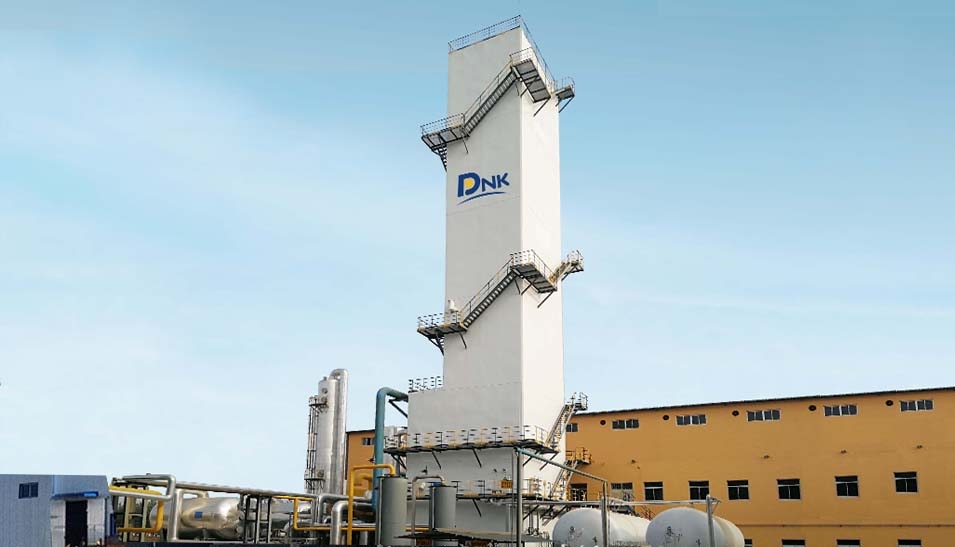
Air Separation Unit industrial applications mainly serve sectors that need dependable oxygen, nitrogen, or argon for production. Steel and non-ferrous metallurgy, chemical and petrochemical processing, paper production, and industrial gas supply each place different demands on product form, purity, pressure, and availability. DINAK offers gaseous, small-scale, large-scale and full-liquid ASUs, as well as other industrial gas separation solutions. The appropriate configuration depends on the required gas products, purity, pressure, capacity, product form and site conditions.
Why Do Industrial Plants Use Air Separation Units?
Reliable On-Site Gas Supply
Many industrial processes consume gas as part of normal production. An ASU can be planned around recurring oxygen, nitrogen, or argon demand and the way products reach the receiving process, connecting gas generation with production priorities.
Process-Specific Gas Requirements
Oxygen, nitrogen, and argon perform different industrial duties. ASU selection should begin with the required gas products, applications, product form and operating conditions. Product quality, delivery pressure, demand pattern, and site conditions should be defined before a configuration is selected.
Centralized Industrial Gas Production
A single plant may serve several furnaces, process units, or distribution users. Planning must account for simultaneous users and responsibilities at each connection, treating the ASU as part of the complete industrial operation.
Industrial Air Separation Unit Applications by Industry
The table below summarizes common oxygen, nitrogen and argon applications across major industrial sectors. Actual gas requirements depend on the process route, equipment design, product specifications and operating conditions.
| Industry | Oxygen Applications | Nitrogen Applications | Argon Applications |
| Steelmaking | Converter oxygen blowing, oxygen lancing, furnace oxygen injection, oxygen-enriched combustion | Furnace purging, inerting and protective atmospheres for annealing | Secondary metallurgy, ladle treatment and inert-gas stirring |
| Non-Ferrous Metallurgy | Oxygen-enriched combustion and process oxygen for selected metallurgical operations | Furnace inerting, purging and protective atmospheres | Selected refining and inert-gas applications |
| Chemical | Oxidation, combustion and other process-specific oxygen applications | Reactor inerting, pipeline purging, tank blanketing and equipment protection | Selected chemical processes requiring argon |
| Petrochemical | Oxidation and other process-specific oxygen applications | Pipeline purging, reactor inerting, tank blanketing and equipment protection | Selected process and analytical applications |
| Pulp & Paper | Oxygen-based bleaching, selected water-treatment and combustion-related applications | Selected process protection and inerting applications | — |
| Glass | Oxygen-enriched combustion and glass-furnace applications | Selected process protection and inerting applications | — |
How Are ASUs Used in Steel and Non-Ferrous Metallurgy?
Oxygen for Metallurgical Processes
Metallurgical facilities use oxygen in suitable steelmaking, refining, combustion, and non-ferrous production duties. The actual requirement depends on the process route, production schedule, pressure, purity, and the number of connected users. Gas demand should be established from the specific furnace technology, production rate and operating schedule.
Nitrogen for Protection and Purging
Nitrogen is used as a protective and inerting gas in applications such as annealing furnaces, equipment purging and selected process systems. Defining receiving equipment, pressure, quality, and operating responsibility helps coordinate supply with production.
Argon for Suitable Metallurgical Duties
Argon is used in selected metallurgical applications, including secondary metallurgy and inert-gas stirring or refining operations. The required argon purity, flow rate and pressure depend on the process and equipment design. The product balance should reflect actual process priorities rather than adding argon as a universal requirement.
What Are ASU Applications in Chemical and Petrochemical Plants?
Oxygen for Oxidation and Process Applications
Chemical and petrochemical plants use oxygen and nitrogen for process-specific applications. Oxygen may be required for selected oxidation and combustion processes, while nitrogen is widely used for reactor inerting, pipeline purging, tank blanketing and equipment protection.
Nitrogen for Reactor Inerting and Pipeline Purging
Nitrogen is used for inerting, pipeline purging, tank blanketing, equipment protection and controlled isolation in selected process systems. A clear specification links nitrogen quality and pressure with the equipment and procedure using it.
ASU Gas Supply to Chemical Process Units
The ASU should be integrated with the plant’s process-gas distribution system and defined battery limits. Pipeline routing, isolation points, downstream readiness, utility availability, and control and communication interfaces all influence product delivery. DINAK’s engineering and project coordination can be considered alongside the plant’s own process and safety responsibilities.
How Do Paper and Other Process Industries Use ASUs?
Paper Production
Oxygen can be used in selected pulp and paper processes, including oxygen-based bleaching and water-treatment applications. Nitrogen may support selected process-protection requirements. The required flow rate, purity and pressure depend on the mill configuration and process technology.
Oxygen for Glass Furnaces
Glass furnaces may use oxygen for oxygen-enriched combustion and other process-specific combustion duties.
Industrial Process Support
Across process industries, the value of an ASU comes from matching gas production with real operational needs. Product priorities, quality, delivery conditions, utilities, and operator responsibilities should be reviewed together. The resulting specification should be based on project-specific operating data.
How Are ASUs Used for Industrial Gas Production?
Gaseous Product Supply
DINAK’s Gaseous ASU is designed for industrial users requiring gaseous oxygen and nitrogen. Its internal-compression process can provide product pressures of up to 8.5 MPa, depending on the selected configuration and project requirements. The product range is applicable to steel, non-ferrous metallurgy, chemical, petrochemical, paper and other industrial applications.
Liquid Product Production
DINAK’s Full Liquid ASU is designed primarily for liquid oxygen and liquid nitrogen production, with argon available in applicable configurations. It is intended mainly for projects whose product requirements are centered on liquid industrial gases. It may suit an industrial gas project whose main product route is liquid. Product balance and distribution requirements should be considered together.
Product Distribution Planning
Industrial gas producers may serve several users with different product forms and schedules. The planning basis should distinguish pipeline demand from liquid-product requirements and identify the priority products.
Which DINAK ASU Type Fits Different Industrial Applications?
Small-Scale ASU
DINAK’s Small-Scale ASU uses cryogenic air separation and cryogenic distillation technology. Its main equipment includes an air compressor, pre-cooling unit, purification system, turboexpander, fractionation tower and liquid oxygen pump. It is applicable to smaller industrial gas demand profiles, including selected steel, non-ferrous, chemical and paper applications.
Large-Scale ASU
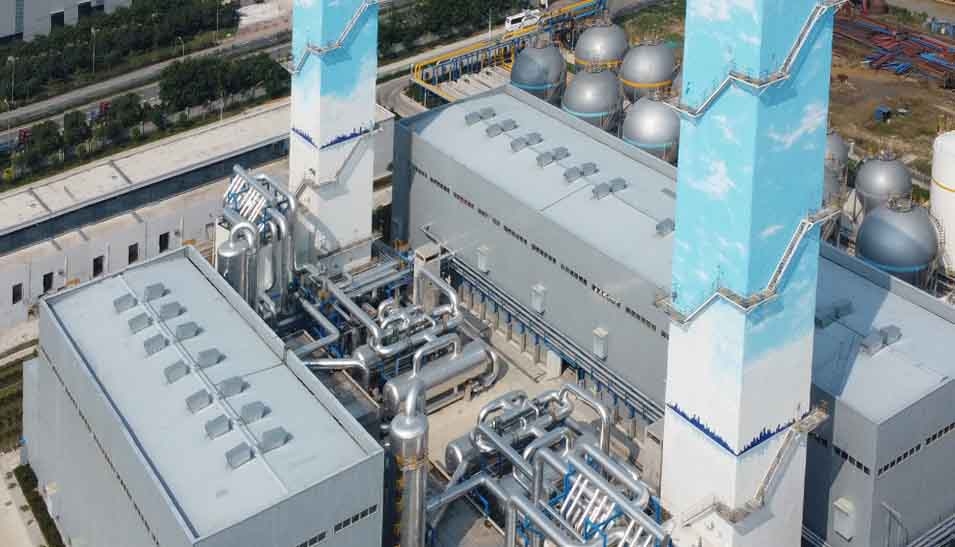
DINAK’s Large-Scale ASU is designed for high-volume industrial gas production. Depending on the configuration, the process can incorporate molecular-sieve purification, turboexpansion refrigeration and argon recovery or purification. Its application should be evaluated against the site’s product balance, connected users, operating conditions, and project interfaces. No universal capacity or efficiency claim should be assumed.
Matching Product Form to Demand
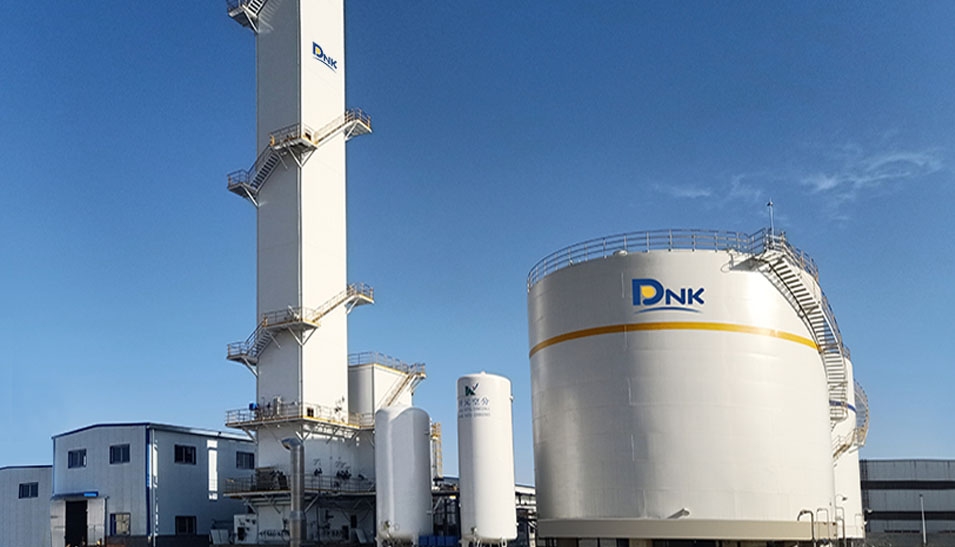
Gaseous and full-liquid systems support different output priorities, while small-scale and large-scale categories address different demand profiles. Selection should be based on the required product mix, capacity, purity, pressure and operating profile.
What Should Engineers Consider Before Selecting an ASU?
Product and Quality Requirements
Define required oxygen, nitrogen, and argon products, their form, quality, pressure, and points of use. This ensures that the ASU specification reflects the actual process requirements.
Demand and Operating Schedule
Define the base load, peak load, minimum load, load profile, turndown range, simultaneous demand, startup requirements, shutdown requirements and future expansion allowance. The resulting load profile should represent the actual operating envelope of the plant. These parameters define the required operating range and turndown capability of the ASU.
Utilities and Site Conditions
Electrical power availability, cooling-water or air-cooling conditions, ambient temperature, altitude, installation conditions, plot space, pipeline routing and downstream interfaces all influence project planning. These inputs should be reviewed with engineering and operations teams before the ASU family is finalized.
How Does DINAK Support Industrial ASU Projects?
Engineering and Project Management
DINAK’s stated service scope includes engineering and project management. These activities help connect the gas requirement with equipment selection, site interfaces, documentation, and the planned project sequence. The plant owner remains responsible for process safety, operating procedures and final operating decisions.
Construction and Assembly
Construction and assembly coordination supports the transition from the selected design to an installed industrial plant. Clear responsibilities for access, connections, completion status, and handover help reduce ambiguity at the site interface.
Staff Training and Handover
DINAK’s service scope also includes staff training. Training can connect operating documents with the installed equipment, product routes, routine checks, and communication responsibilities. A structured handover gives the industrial team a clearer basis for routine operation.
Conclusion
Air Separation Unit industrial applications span metallurgy, chemical and petrochemical processing, paper and materials production, and industrial gas supply. The right solution depends on the gas duty, product form, quality, pressure, demand pattern, utilities, site interfaces, and operating responsibilities. DINAK’s ASU categories and project services provide a practical basis for developing an industrial gas solution around documented conditions. Explore DINAK’s industrial air separation solutions to identify the right ASU approach for your production process.
FAQ
Q: What are the main Air Separation Unit industrial applications?
A: The main applications include steel and non-ferrous metallurgy, chemical and petrochemical processing, paper production, materials processing, and industrial gas production. Oxygen, nitrogen, and argon may serve different duties in each sector. The suitable ASU depends on product form, quality, pressure, demand pattern, utilities, and site interfaces.
Q: Which industries commonly use industrial oxygen and nitrogen?
A: Steel, non-ferrous metallurgy, chemical, petrochemical, paper, materials, and industrial gas facilities may use oxygen or nitrogen. Oxygen can support suitable process or combustion duties, while nitrogen is often used for inerting, purging, sealing, or protection. The actual requirement must come from the plant’s documented process conditions.
Q: Should an industrial plant choose a gaseous or full-liquid ASU?
A: Choose according to the main product route. A gaseous ASU is relevant when gaseous oxygen and nitrogen are supplied to connected users. A full-liquid ASU is oriented toward liquid oxygen, nitrogen, and argon. Product demand, quality, pressure, distribution needs, utilities, and operating schedules should be assessed together.
Q: What information is needed before selecting industrial air separation equipment?
A: Define the required gases, product form, quality, pressure, normal and peak demand, simultaneous users, operating schedule, utilities, climate, altitude, installation access, pipeline interfaces, downstream responsibilities, and training needs. These inputs give DINAK a practical engineering basis without relying on unsupported universal specifications.
内页小-430x246.jpg)