ASU product purity should be defined according to the industrial process that receives the gas. Product specifications may include purity, impurity limits, pressure, temperature, flow, product form, and the measurement point. DINAK can use these documented requirements to align an ASU configuration with the facility’s actual duty without assuming that every project needs the same purity.
What Does Air Separation Unit Product Purity Mean?
Oxygen Product Quality
Oxygen quality is a process requirement, not simply a headline number. Metallurgy, chemical processing, paper production, and other industrial duties may need different oxygen conditions. The specification should define the required O₂ purity, product form, delivery pressure, flow range, operating conditions, and measurement point. Where applicable, impurity limits and oxygen-service requirements should also be specified.
Nitrogen Product Quality
Nitrogen is commonly used for inerting, purging, blanketing, sealing, and process protection. Its quality requirement depends on what must be protected and how sensitive that duty is to residual oxygen and other specified impurities. A useful specification links nitrogen quality with flow, pressure, duration, and the receiving system rather than treating purity as an isolated value.
Argon Product Quality
Argon may be included when the industrial process needs it, particularly in suitable metallurgical applications. Argon requirements should be defined separately from oxygen and nitrogen because product demand, delivery form, and quality expectations can differ. Adding argon also changes the overall product balance considered during ASU planning.
Why Does Gas Purity Affect ASU Selection?
Separation Requirements
A higher purity requirement or tighter impurity limit can affect the separation process, product recovery, process configuration, instrumentation, control strategy, and acceptance criteria. The design objective should be to meet the required product specification without unnecessarily exceeding the process requirement. The ASU supplier should receive the documented process requirements before the final configuration is selected.
Product Form and Delivery Conditions
Gaseous oxygen and nitrogen supplied through a plant network create a different specification from liquid products intended for storage and distribution. Pressure, flow rate, temperature, moisture or dew-point requirements where applicable, pipeline interface, and delivery schedule all influence how the product specification is defined. These conditions should be considered together so that a product specification remains technically applicable during normal operation and acceptance testing.
Utility and Operating Conditions
Power, cooling-water conditions, ambient conditions, site altitude, and operating schedules form part of the ASU design basis and should be evaluated alongside product-quality requirements. Product-quality requirements should therefore be evaluated together with the applicable operating conditions. The project basis should therefore connect purity with utilities and expected production conditions.
How Should Oxygen Purity Requirements Be Defined?
Identify the Industrial Duty
Start by describing what the oxygen does in the process and where it is consumed. A steel or non-ferrous metallurgy user may have different priorities from a chemical or petrochemical unit. The specification should identify essential users, operating stages, pressure needs, and any quality-sensitive step rather than copying a generic oxygen value.
Define Normal and Upset Operating Conditions
Normal production should be separated from startup, shutdown, turndown, maintenance, and upset conditions. This helps the engineering team understand which quality requirements apply continuously and which apply only at specific stages. It also prevents a short-term condition from being mistaken for the permanent design basis.
Define the Product Quality Measurement Point
Product quality should be defined at an agreed sampling or measurement point, using the applicable online analyzer or laboratory test method. An internal equipment reading may not represent the condition received by the process after pressure changes, routing, or connection through a site pipeline. Clear measurement responsibility helps the owner, ASU team, and downstream users interpret results consistently.
How Should Nitrogen Quality Be Specified?
Inerting and Protective Duties
For inerting and protection, the specification should describe the material or process being protected and the consequence of unsuitable gas quality. Nitrogen purity is commonly specified by the allowable residual oxygen concentration, often expressed as O₂ ppm, together with required flow, pressure, and operating conditions. These details provide the engineering team with a basis for evaluating the required ASU configuration.
Purging Applications
Purging requirements depend on equipment volume, connection layout, operating procedure, and the required purge endpoint or acceptance condition. Purity alone does not describe the whole duty. The project should state the purging sequence, user interface, and quality confirmation method in its operating documentation.
Continuous Process Supply
A continuous industrial process benefits from a nitrogen specification that is stable, measurable, and linked to its operating schedule. The quality basis should account for normal use, overlapping users, and any planned changes. This approach supports clearer ASU selection without promising that one configuration fits every site.
When Should Argon Be Included?
Metallurgical Applications
Argon is relevant when the documented metallurgical process requires it. The project should identify the users, product form, quality expectation, pressure, and operating schedule. These inputs help determine whether argon is a core product, a secondary requirement, or outside the intended ASU product plan.
Product Balance Considerations
When oxygen, nitrogen, and argon are required together, each product must be considered in the same operating basis. A project may have one dominant gas and smaller requirements for other products. Stating priorities clearly helps avoid a product balance that does not reflect the actual operating basis.
Gaseous and Liquid Output
The required output form affects how quality is specified and handed over. DINAK’s gaseous ASU category is oriented toward gaseous oxygen and nitrogen, while Full-Liquid ASU configurations are primarily designed for liquid oxygen and liquid nitrogen production, with liquid argon available in applicable configurations. The selection should follow the facility’s required product form, capacity, and operating profile.
Which DINAK ASU Configuration Fits the Product Requirements?
| ASU Configuration | Typical Product Form | Typical Products | Key Specification Factors |
| Small-Scale ASU | Gaseous | Oxygen, nitrogen | Purity, capacity, pressure, site conditions |
| Large-Scale ASU | Gaseous and applicable liquid products | Oxygen, nitrogen, argon | Purity, impurity limits, capacity, product balance |
| Gaseous ASU | Gaseous | Oxygen, nitrogen | Purity, flow, pressure |
| Full-Liquid ASU | Mainly liquid | Liquid oxygen, liquid nitrogen; argon where configured | Liquid product capacity, purity, storage and transfer |
Gaseous ASU
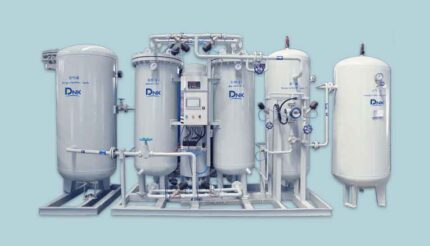
DINAK’s Gaseous ASU solutions are relevant when industrial users need gaseous oxygen and nitrogen supplied to a connected process. The project specification should still define product quality, pressure, demand pattern, utilities, and the delivery interface before the final configuration is selected.
Full-Liquid ASU
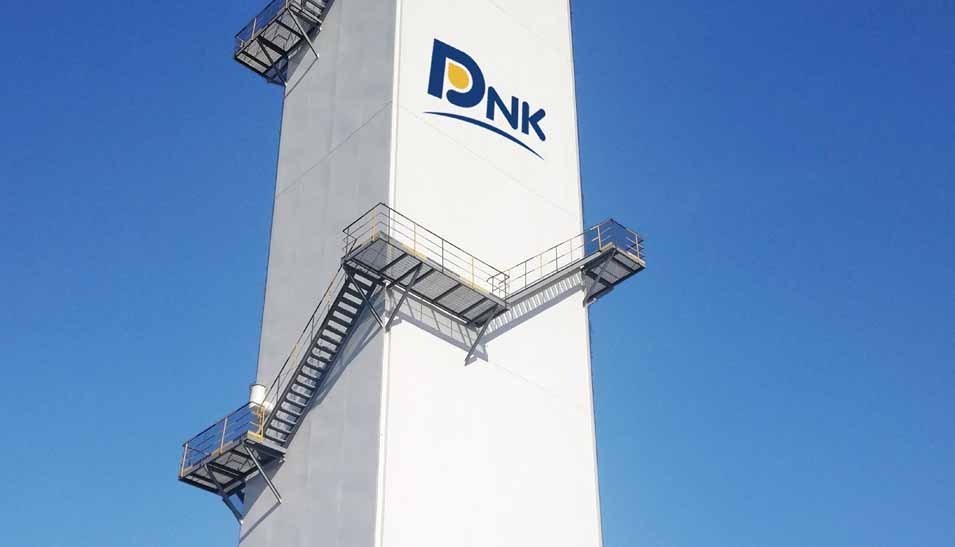
DINAK’s Full-Liquid ASU category is primarily designed for liquid oxygen and liquid nitrogen production, with argon available in applicable configurations. It may suit a project whose main product route is liquid rather than continuous gaseous pipeline use. Quality, product balance, storage arrangements, and distribution requirements must be documented together.
Small-Scale and Large-Scale ASU
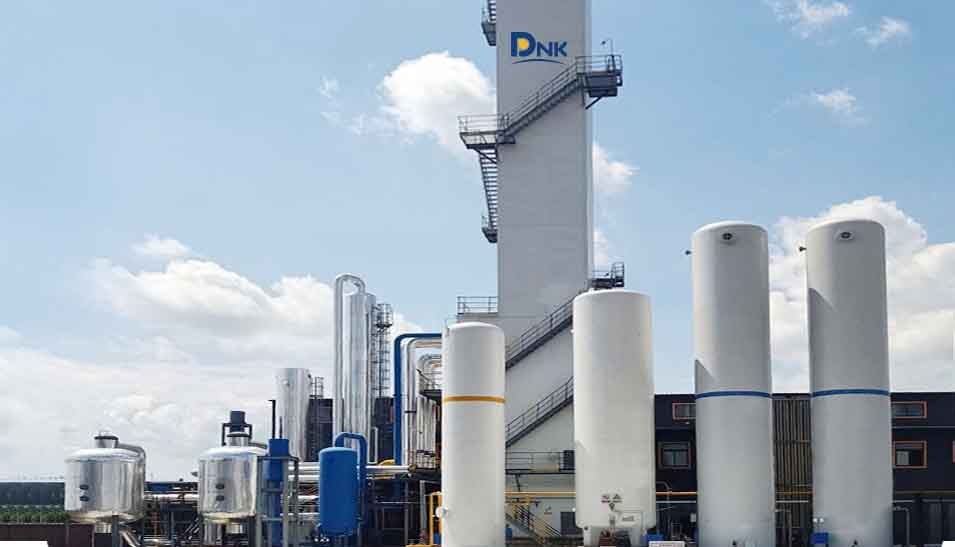
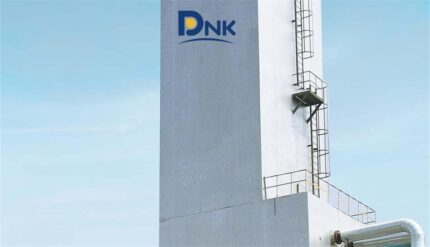
Small-scale and large-scale ASUs address different production capacities, product combinations, and site requirements. DINAK’s Small-Scale ASU uses cryogenic technology with air compression, pre-cooling, purification, turboexpansion, and fractionation, while its Large-Scale ASU can be configured around molecular sieve purification and turbo-expansion refrigeration. The appropriate configuration should be selected according to product capacity, purity, pressure, product form, site conditions, and operating requirements.
How Does DINAK Support Product Specification?
Requirement Review
DINAK can review documented product, pressure, demand, and site requirements as inputs to ASU planning. The quality discussion is most useful when it includes the industrial duty, operating schedule, pipeline or receiving interface, and the conditions under which the gas will be accepted.
Engineering Coordination
Depending on the agreed project scope, DINAK’s engineering and project services can help connect product-quality requirements with project management, construction, assembly, and site coordination.
Training and Handover
Staff training helps operators understand product-quality requirements, measurement points, routine checks, and communication with downstream users. A clear handover should connect training, operating documents, responsibilities, and open items. DINAK includes staff training within its stated service scope.
Conclusion
Air Separation Unit purity should be matched to the industrial process, product form, delivery conditions, and measurement interface. A practical specification distinguishes essential quality requirements from assumptions, connects oxygen, nitrogen, and argon needs with site conditions, and gives DINAK a sound basis for selecting the appropriate ASU family. Explore DINAK’s industrial air separation solutions to define gas quality around your actual process requirements.
FAQ
Q: What Determines ASU Product Purity?
A: Air Separation Unit purity is determined by the downstream industrial duty, product form, delivery pressure, operating profile, and the quality accepted at the agreed measurement point. Oxygen, nitrogen, and argon may each have different requirements. The specification should come from documented process needs rather than a generic maximum purity assumption.
Q: Does every industrial process require the highest gas purity?
A: No. The suitable purity depends on what the gas does in the process and how sensitive that duty is to impurities. Over-specifying purity can increase process and equipment requirements without providing a corresponding process benefit. DINAK should receive the actual process duty before the ASU configuration is selected.
Q: How should nitrogen quality be specified for industrial use?
A: Nitrogen quality should be defined together with its use, flow, pressure, duration, receiving interface, and operating schedule. Inerting, purging, blanketing, and process protection may have different priorities. The specification should also state where quality is measured and how results are communicated during routine operation and handover.
-430x247.jpg)
内页小-430x246.jpg)