A small-scale ASU can generate nitrogen for food packaging and beverage bottling. It does this through cryogenic air separation. For food and beverage makers, its usefulness depends on the nitrogen needs of the production lines. It also depends on the necessary gas quality and how the machinery connects to the plant. DINAK small-scale ASU systems combine oxygen and nitrogen generation. They feature a compact, skid-mounted design. This makes them a solid option to consider when planning on-site nitrogen delivery.
Why Nitrogen Matters in Food and Beverage Production
Nitrogen helps reduce oxygen exposure during food packaging and beverage bottling. The main goal is to support the product protection needed by the process. At the same time, the gas supply and the packaging work should be viewed as linked parts of manufacturing.
Nitrogen for Food Packaging
Nitrogen-filled packaging uses nitrogen to lower the oxygen level around the item. This makes nitrogen gas for food packaging vital where oxidation is a real worry. It is better than treating gas filling as a detached task with no link to product quality.
When looking into nitrogen flushing, begin with the packaging line itself. Note when nitrogen is used. Check which lines operate at the same time. Also, record the gas conditions needed at each connection. These facts give the engineering staff a strong base for checking supply capacity. This is much better than picking equipment just by its name or stated size.
Nitrogen for Beverage Bottling
Nitrogen for beverage bottling serves a similar product-protection goal. It helps reduce oxidation. Its value must be checked against the specific bottling process. You should not assume every beverage line needs the exact same gas conditions or works in the same way.
A plant running packaging and bottling tasks must look at its total demand. If both use nitrogen during the same work period, the supply check must include that overlap. Planning from the real work schedule makes the bond between gas generation and plant usage much clearer.
How a Small-Scale ASU Produces Nitrogen
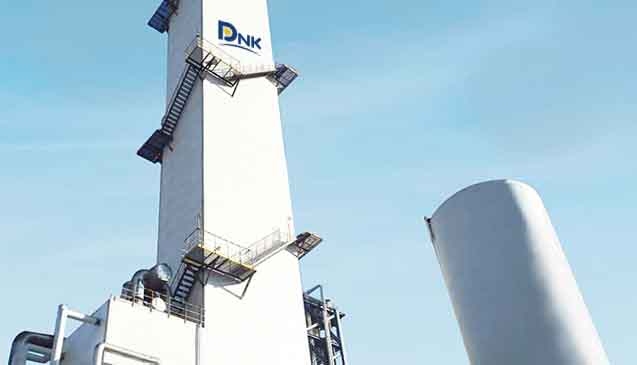
Cryogenic air separation pulls oxygen and nitrogen from the air. It does this through low-temperature separation. The method uses the distinct boiling points of the parts to get separate products. Thus, the ASU is a gas-generation system rather than a simple packaging tool.
Cryogenic Separation
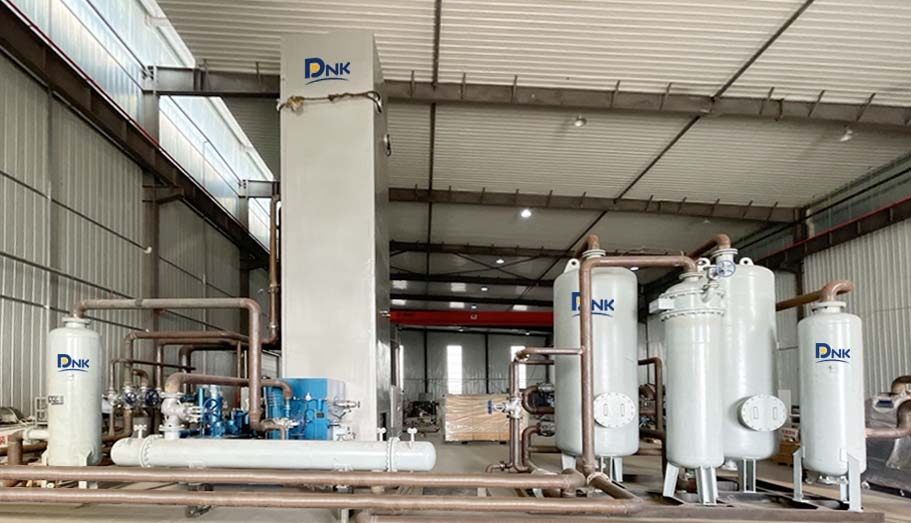
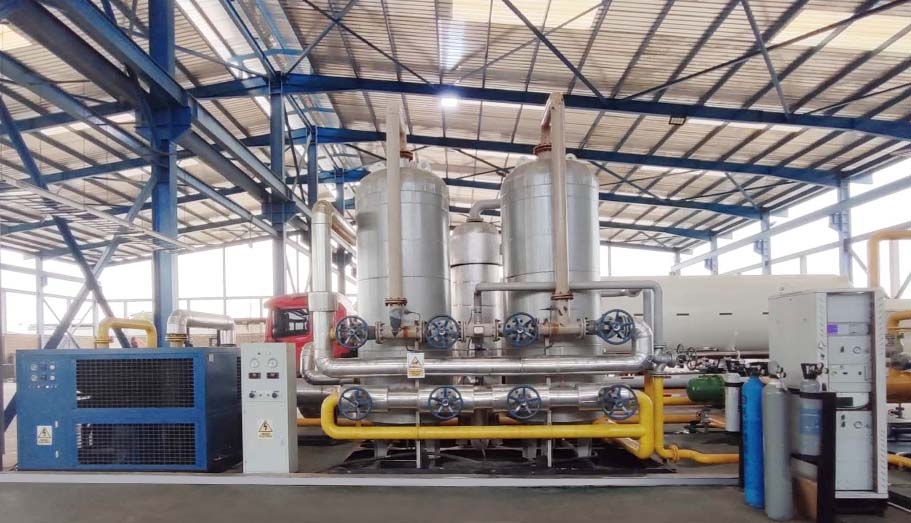
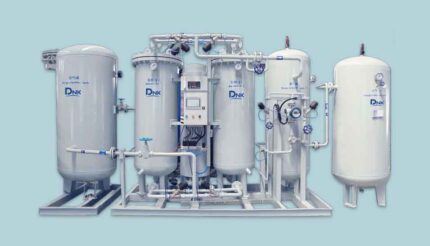
The machinery includes air compression, precooling, a cleaning system, and a fractionation tower. Air is prepped and chilled for cryogenic distillation. The separation happens inside the tower. Connecting pipes link the process units. They carry the split products throughout the system.
For a food maker, the main link is between this production method and the nitrogen specs needed by the receiving line. Calling the gas high purity does not prove it fits every food use. The needed gas quality must be set for the process before fixing the equipment setup.
Compact Equipment Layout
DINAK uses a full skid-mounted frame for its small-scale ASU. It includes high-pressure hose links to aid setup. Its compact design is very helpful when open floor space drives the plant planning choice. The design also features an internal compression method.
Compact equipment must still fit the work site. Look at its spot, the connecting pipe paths, and access needs alongside the gas demand. A skid-mounted setup must be checked as part of that layout. Do not assume a set setup time or a floor space that has not been mapped out for the project.
Matching the ASU to Production Demand
Picking a small-scale ASU for food packaging begins with the nitrogen need. It does not start with the oxygen rating alone. DINAK offers models with various mixes of oxygen and nitrogen output. Looking at both products helps clarify the equipment range. It keeps the food-industry check focused firmly on nitrogen.
Capacity and Gas Requirements
Oxygen and nitrogen production capacities vary by model and should be verified independently against the manufacturer’s specifications. Nitrogen output should not be inferred from oxygen output. Likewise, oxygen purity applies only to the oxygen product and should not be used to define the nitrogen supplied to packaging or bottling equipment. Food-production planning requires a separate nitrogen specification, including purity, pressure, flow rate, and other gas conditions at the point of use.
Compare the model capacity with standard demand. Look at times when many gas users work together. Also, spot any planned shifts to the work schedule or line layout.
Plant Integration and Customized Solutions
Cryogenic nitrogen supply for food processing needs a clear link between the ASU and the receiving tools. The plant team must note gas needs and work duties before agreeing on the layout. DINAK can offer customized solutions based on client needs. The planned setup is then checked against the real application.
Operator training also fits into the integration plan. Knowing the machinery and the link between gas generation and line usage aids a better handover to plant staff. Training needs must be discussed for the project. They should not be assumed to be the same for every setup.
Conclusion
A small-scale ASU gives food and beverage makers a solid way to check nitrogen generation as part of their plant setup. Its worth comes from matching cryogenic separation, nitrogen output, and the equipment layout to the packaging and bottling tasks that need the gas. Explore DINAK customized air separation solutions to match nitrogen supply with your food and beverage work.
FAQ
Q: What does a small-scale ASU produce?
A: A small-scale ASU uses cryogenic separation to make oxygen and nitrogen from the air. DINAK provides models with various output mixes. Therefore, the nitrogen capacity must be checked apart from the oxygen capacity. For food and beverage work, selection must follow the nitrogen needs of the packaging or bottling process.
Q: Can a small-scale ASU support beverage bottling?
A: A small-scale ASU can be considered a nitrogen source for beverage bottling. This works where its output and gas quality meet the process needs. Nitrogen is used in beverage bottling to help lower oxidation. The check must weigh the bottling schedule. It should also include any other nitrogen users working at the same time.
Q: What should food manufacturers consider when selecting an ASU?
A: Food makers must define nitrogen demand and the needed gas quality. They must also check the conditions at the receiving tools before picking an ASU. Open space, connections, and work duties also need a close look. DINAK customized solutions can be discussed against those needs. The equipment capacity and the planned layout are then checked for the specific work operation.
-430x247.jpg)
内页小-430x246.jpg)