In today’s ever-changing environment of modern industry, operational efficiency has become a critical factor for maintaining manufacturing competitiveness. In a lot of cases, the availability of high-purity industrial gases is an ongoing cost that seems out of the hands of manufacturing facilities. Traditionally, the process of using third parties for liquid oxygen and nitrogen delivery has been followed for many years now. However, at DINAK, we believe there is a more efficient on-site gas supply approach. With extensive experience in gas separation and industrial gas equipment manufacturing, we believe there is a better way. We have seen firsthand how transitioning to on-site production can reduce operating expenses and improve supply reliability. By implementing a small-scale ASU (Air Separation Unit), businesses can move away from the traditional liquid supply model toward a more sustainable, cost-effective, and autonomous future. This blog will explore why on-site production is the strategic choice for modern industry and how DINAK solutions help manufacturers improve operational efficiency and long-term investment value.
Analyzing Traditional Liquid Gas Procurement Costs
Impact of Delivery Fees and Logistics
When you rely on liquid gas, you are not just paying for the gas itself; you are paying for the entire supply chain. This includes transportation costs, fuel surcharges, and the supplier's overhead for maintaining a fleet of specialized delivery vehicles. Furthermore, your production schedule becomes tied to a third party’s delivery timeline. At DINAK, we understand that any delay in gas delivery can lead to costly downtime.
The Hidden Expense of Liquid Evaporation
One of the most overlooked costs of liquid gas is "boil-off" or evaporation loss. Cryogenic liquids naturally warm up and vaporize over time, even in highly insulated containers. If your gas consumption is not perfectly matched to your delivery schedule, a certain amount of product loss may occur over extended storage periods due to natural boil-off. Although advanced storage technologies can minimize evaporation losses, long-term liquid gas storage may still involve natural boil-off losses.
Economics of Onsite Oxygen and Nitrogen Production
Replacing Expensive Liquid Gas Deliveries
The primary economic benefit of onsite gas generation systems, including small-scale ASU systems, is reducing dependence on delivered liquid gases. Instead of buying processed, liquefied gas that has been transported over long distances, you produce gaseous products directly from ambient air. This transition allows manufacturers to bypass the commercial markups of gas distributors.
Stable Pricing Through Onsite Gas Production Economics
Liquid gas prices are subject to market fluctuations, often influenced by energy costs and regional supply shortages. By investing in a DINAK Gaseous ASU or a small air separation unit, you gain greater control and predictability over long-term gas production costs. The cost of on-site production is remarkably stable, allowing for more accurate long-term financial planning. This stability is particularly valuable for industries like steel smelting and chemical processing, where gas is a critical and high-volume raw material.
Technical Excellence of the DINAK small-scale ASU
Modular Skid-Mounted Design for Rapid Installation
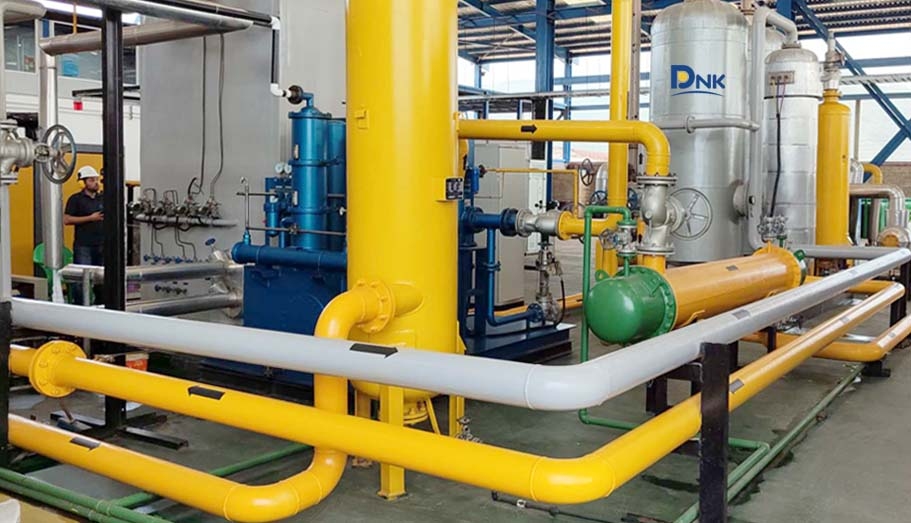
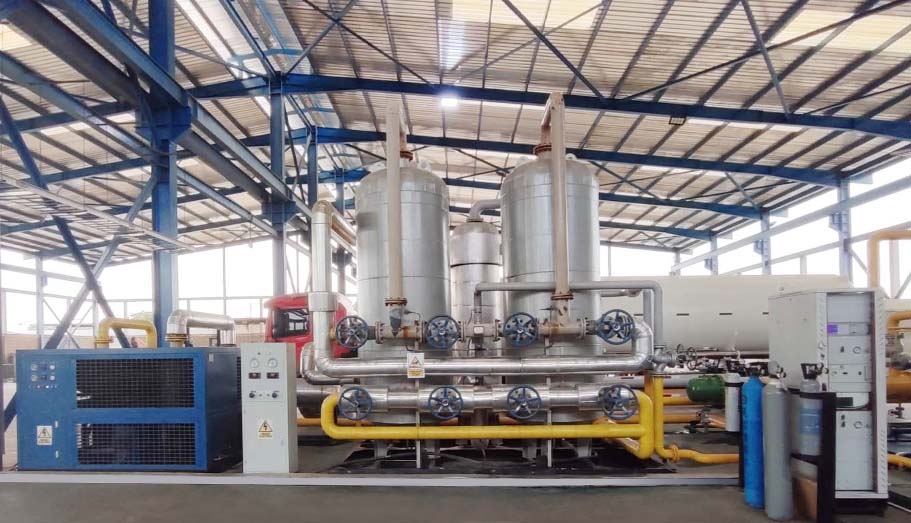
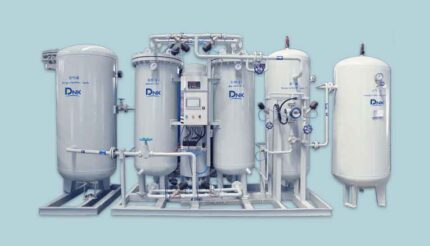
One of the unique features of our small-sized ASU is the skid-mounted design concept of the unit. In this concept, all the main components such as the air compressor, purification equipment, turbo expander, and fractionation tower are mounted in a small frame. The modularity of the design significantly cuts down on the time and effort required to install it. In addition, it is small in size and can significantly reduce site preparation requirements compared with conventional plant construction.
Safety and Efficiency of Internal Compression Processes
We utilize an advanced internal compression process in many of our units. By using a liquid oxygen pump to increase pressure within the system before vaporization, we reduce the complexity of downstream oxygen compression systems. This internal compression technology not only improves the overall safety of the plant by reducing the risks associated with high-pressure gas compression but also enhances work efficiency and reduces maintenance overhead.
Maximizing ROI with Small Air Separation Units
Energy Efficiency and Significant Operational Savings
Our engineering team at DINAK focuses heavily on energy conservation. We have optimized our process flow design to achieve ultra-low operating pressures, which maximizes energy efficiency.
Predictable Maintenance and Long Equipment Lifespan
A common concern with on-site production is the burden of maintenance. At DINAK, we address this through our comprehensive service and guarantee system. We offer remote monitoring and diagnostics, allowing our engineers to detect early warning signs and provide faster diagnosis without an on-site visit. Furthermore, our Maintenance Agreement options provide planned inspections and spare parts management, ensuring that your small air separation unit operates reliably throughout its entire life cycle.
The Future of Onsite Oxygen Production
Liquid Oxygen Replacement for Smarter Manufacturing
Replacing liquid oxygen with onsite oxygen production is a major step toward "green manufacturing." Our small-scale ASU technology reduces the carbon footprint associated with transporting liquid gases over long distances. Furthermore, the high-purity oxygen produced by our equipment—meeting standards required for glass furnaces and metallurgical kilns—ensures that performance is never compromised.
Scalability to Meet Growing Industrial Demands
We understand that your needs may change. DINAK provides customized solutions tailored to your specific demands. Whether you are an industrial manufacturer requiring oxygen and nitrogen supply or a large steel plant requiring a Large-Scale ASU, our equipment can be adjusted for purity, flow rate, and pressure. This flexibility ensures that your investment in a small-scale ASU remains valuable even as your business grows.
Conclusion
Transitioning from traditional liquid gas procurement to a small-scale ASU is more than just a cost-cutting measure; it is a strategic investment in your facility's future. By eliminating the overhead of delivery fees, the waste of evaporation, and the uncertainty of market pricing, you can achieve substantial industrial gas cost reduction. At DINAK, we are dedicated to being your best partner in this journey. Based on our over 20 years of experience in manufacturing and a quality & innovation-driven approach, we offer equipment that will allow you to achieve energy savings, improve safety standards and get the most from your investment. Contact DINAK today to learn how our customized small-scale ASU solutions can optimize your industrial gas supply strategy and drive long-term savings.
FAQ
Q: How long does it take to see a return on investment (ROI)?
A: Although every facility is different, many of our customers find that their equipment pays for itself within a few years through reduced operational expenses.
Q: What kind of maintenance does a small-scale ASU require?
A: Modern units are highly automated and require minimal manual intervention. DINAK supports our clients with remote monitoring, diagnostics, and comprehensive Maintenance Agreements to ensure stable and reliable operation throughout the equipment's lifespan.
Q: Is a small-scale ASU difficult to install?
A: No. Our small-scale ASU features a skid-mounted design and uses high-pressure hoses for internal connections, which greatly reduces on-site installation work and time, allowing for rapid deployment.
-430x247.jpg)
内页小-430x246.jpg)