In modern metallurgy, continuous and reliable industrial gas supply is essential for stable production. For steel and metal processing plants, a Large-Scale Air Separation Unit (ASU) is a critical production support system that directly affects operational reliability and energy efficiency. DINAK specializes in the design and manufacturing of industrial gas equipment, including large-scale air separation units, customized according to customer process requirements and energy consumption targets. We understand that selecting the right Air Separation Plant is a strategic decision that influences the plant's long-term production efficiency, operating cost, and gas supply reliability. This guide provides a comprehensive framework to help procurement managers, engineering firms, and project leads navigate the complexities of Air Separation Unit Selection Criteria to ensure a reliable and cost-effective Steel Plant Gas Supply.
Understanding Metallurgical Gas Demand Matching
Matching Oxygen, Nitrogen, and Argon Ratios
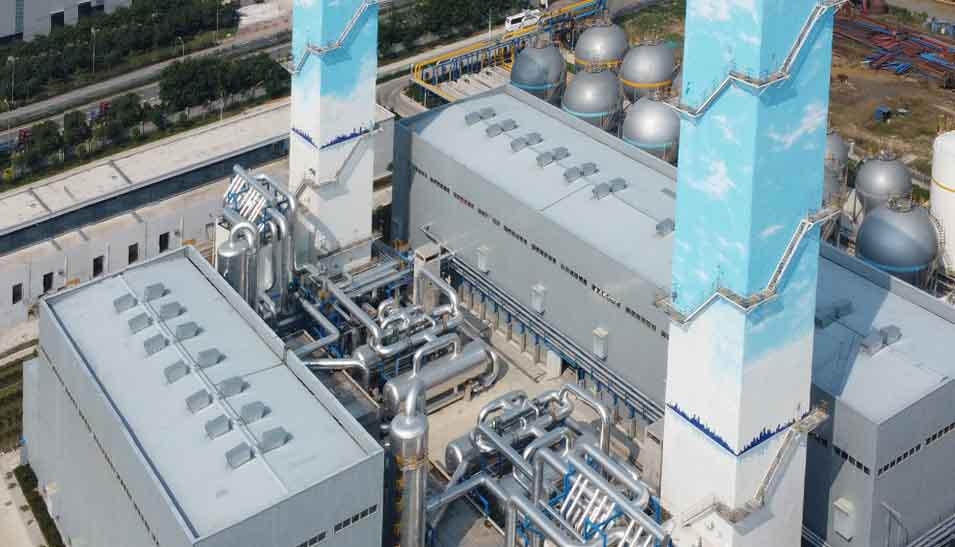
The first step in ASU Capacity Planning for a metallurgical facility is the precise alignment of gas production with actual process requirements. Steelmaking is a multi-gas environment: oxygen is required for blast furnace enrichment and converter blowing, while nitrogen is essential as a protective atmosphere in annealing furnaces and for pipeline purging. Furthermore, argon is widely used in secondary metallurgy processes, including stainless steel refining, ladle treatment, and inert atmosphere protection applications. We design our Large-Scale ASU systems to utilize advanced distillation technology, often incorporating a structured packing rectification columns with advanced separation efficiency to improve separation efficiency.
Analyzing Peak and Base Load Requirements
Steel production is rarely a flat line; it fluctuates with market demand and furnace cycles. Therefore, a robust Industrial Gas Supply Solution must provide sufficient load adjustment capability to respond to production fluctuations while maintaining stable gas quality. DINAK customized solutions are designed to provide reliable gas supply under different operating conditions. We emphasize creating a system that balances the base load with the flexibility to scale up rapidly when needed.
Key Selection Criteria for Large-Scale ASU
Prioritizing Cryogenic Air Separation for Purity
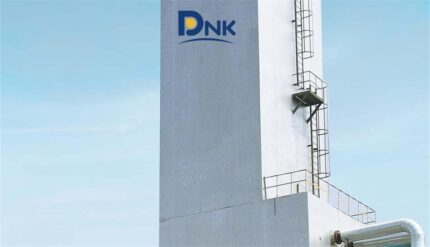
For the massive volumes required by the steel industry, Cryogenic Air Separation is the preferred technology for large-scale production of high-purity oxygen, nitrogen, and argon. DINAK provides different ASU configurations, including gaseous oxygen ASU systems and full liquid ASU systems according to customer requirements, leveraging deep cryogenic distillation to cool and liquefy air, utilizing the different boiling points of components to achieve precise separation in a fractionating column. This ensures that the oxygen and nitrogen delivered to your production line meet the required purity specifications for different steel and metal processing applications.
Ensuring Stability for Continuous Operation Needs
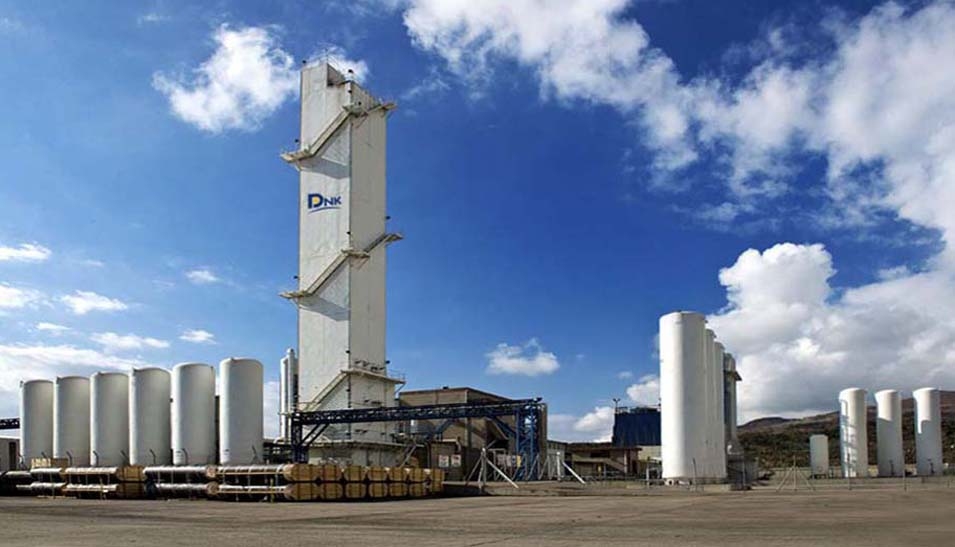
In a steel plant, any unexpected shutdown can significantly affect production efficiency and operating costs. A reliable Industrial Gas Plant must be built with high-quality components.
Strategic ASU Capacity Planning and Design
Future-Proofing for Potential Production Expansion
A common mistake in procurement is sizing an Oxygen Production Plant only for today’s needs. Effective ASU Capacity Planning involves projecting future production increases. We work closely with global customers to create solutions tailored to their specific site conditions, allowing for modular upgrades or pre-planned expansion paths within the initial Large Scale Oxygen Plant Design. By choosing a customizable solution, we reduce future capital expenditure associated with major plant expansion.
Modular vs. Custom Large Scale Oxygen Plant Design
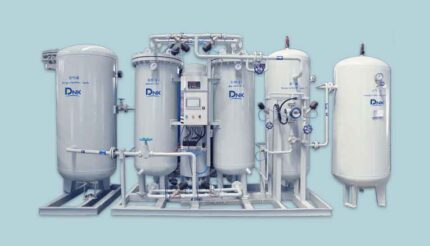
While some facilities require completely bespoke engineering, many benefit from our modular, skid-mounted designs. These units, including our small-scale ASU and certain Large-Scale ASU configurations, are highly integrated and factory-tested, which significantly shortens the on-site installation and commissioning cycle while reducing infrastructure costs. This approach is particularly valuable for projects with limited space or those requiring rapid deployment to meet project commissioning schedules.
Efficiency and Advanced Automation Control
Implementing Energy-Efficient Air Separation Unit Tech
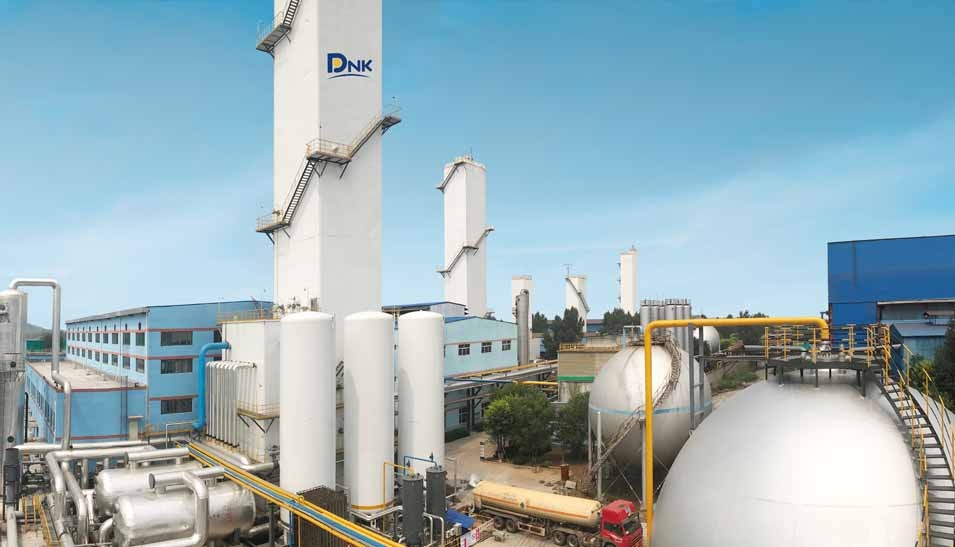
Electricity is the primary operating cost for any Nitrogen Production Plant or Oxygen Production Plant. We apply an ultra-low pressure process that can reduce the operating pressure of the raw material air compressor to significantly lower levels compared to traditional designs, drastically cutting power consumption.
Maximizing Performance via ASU Automation Control
Modern gas plants reduce manual operation requirements through automated monitoring and control. Advanced ASU Automation Control through a Distributed Control System (DCS) or Programmable Logic Controller (PLC) allows for one-button start/stop and real-time monitoring of all key parameters. Our systems are designed to move toward intelligent air separation, reduced manpower requirements, and semi-automated operation, using automated load regulation to sync gas production with the actual consumption of the steel furnace. This automation prevents gas wastage and optimizes the life cycle of the machinery.
Advantages of DINAK Industrial Gas Solution
Proven Success in Global Metallurgical Projects
With extensive project experience across different industries and regions, our experience spans diverse environments, from the high-altitude plateaus of Qinghai to the tropical climates of Indonesia. For instance, our successful delivery of a large-scale internal compression unit in Indonesia demonstrated our ability to execute complex projects under international standards, ensuring stable operation for major metallurgical clients.
Comprehensive Maintenance and Remote Monitoring Support
Our relationship with our customers does not end at installation. We offer a full-lifecycle Industrial Gas Equipment After-Sales Service that includes Remote Monitoring & Diagnostics. This system allows our engineers to monitor equipment health 24/7, providing early fault warnings and reducing the need for on-site visits. Combined with our Spare Parts Management and tailored maintenance agreements, we ensure that your Industrial Gas Supply Solution maintains a steady output with minimal risk throughout its plant life cycle.
Conclusion
Selecting the right Large-Scale Air Separation Unit is a foundational step in securing the long-term competitive advantage of a steel or metal processing facility. By focusing on a precise match of O2, N2, and Ar demand, prioritizing high-efficiency Cryogenic Air Separation technology, and embracing advanced ASU Automation Control, plants can achieve a balance of high performance and low operational cost. DINAK provides customized air separation solutions designed around customer process requirements and long-term operating objectives. Whether you are looking for equipment sales or a comprehensive Gas Investment partnership, our goal is to help you maximize productivity and achieve sustainable growth in an ever-evolving industrial landscape.
Contact the experts at DINAK today to design a customized, high-efficiency Industrial Gas Supply Solution for your metallurgical project.
FAQ
Q: How do you determine the capacity for a Large-Scale Air Separation Unit?
A: ASU Capacity Planning involves analyzing the specific requirements of your metallurgical processes—such as the amount of oxygen required per ton of steel—and calculating the necessary flow rates for oxygen, nitrogen, and argon. It must also account for peak demand periods and potential future expansions to avoid undersizing.
Q: What is the benefit of a skid-mounted ASU design for industrial sites?
A: A modular or skid-mounted design, such as our small-scale ASU or certain Large-Scale ASU units, allows for a compact footprint and shorter on-site installation time. This reduces infrastructure costs and allows the facility to begin production faster than traditional site-built plants.
Q: What factors should be considered when selecting a Large-Scale Air Separation Unit for a steel plant?
A: When selecting a Large-Scale Air Separation Unit for a steel plant, key factors include oxygen, nitrogen, and argon demand, required gas purity, production capacity, energy consumption, operating reliability, automation level, and future expansion plans. A properly designed ASU should match current production requirements while providing flexibility for long-term plant development.
-430x247.jpg)
内页小-430x246.jpg)