What is PSA Nitrogen Generation
In many industrial fields, the need for nitrogen as a key inert shielding gas keeps growing. Pressure swing adsorption (PSA) nitrogen generators stand out for their strong performance, low cost, and ease of use. They serve as the top choice for making nitrogen right on site. The main technology in these setups is PSA. It is a smart way that relies on changes in pressure to pull nitrogen from squeezed atmospheric air. This approach skips the complicated and expensive cooling methods.
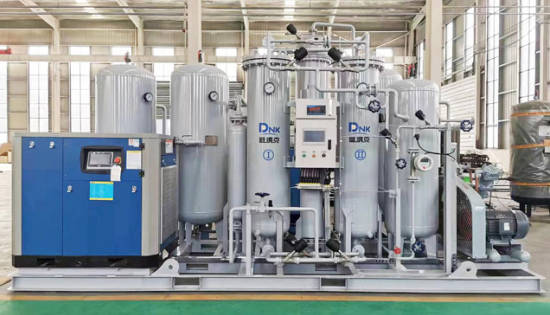
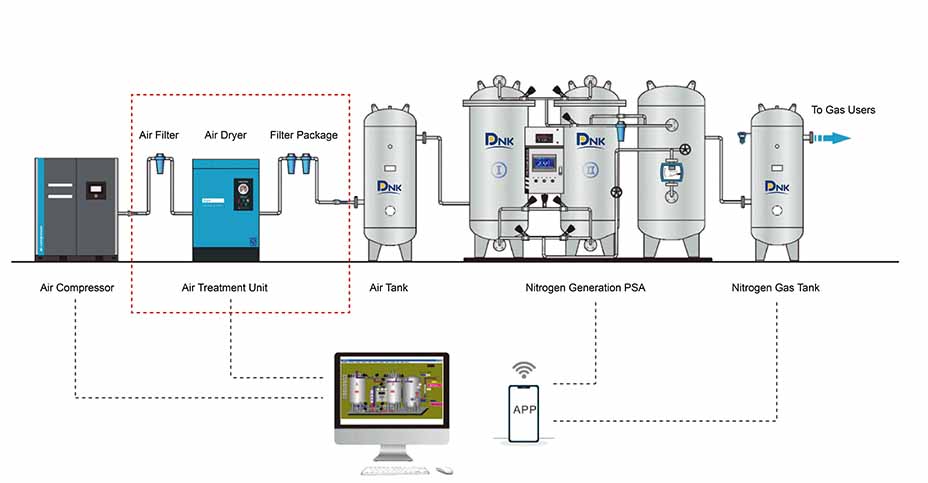
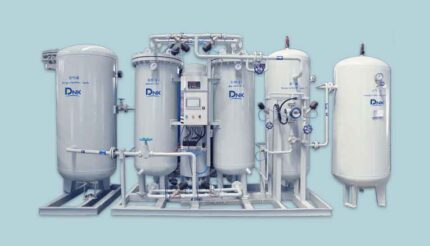
At DINAK, our company provides a full lineup of PSA nitrogen generators as part of its air separation unit (ASU) components. Our PSA nitrogen generator includes an air compressor, air treatment device, air buffer tank, nitrogen generator host, control and monitoring system, and more. These setups come in modular form. They aim for a long working life and solid dependability. That makes them perfect for steady use in factories.
Why PSA Over Traditional Methods
Next to cryogenic air separation, PSA technology proves much quicker and cheaper to run. Pressure swing adsorption (PSA) nitrogen generators are smart on-site devices for gas separation. They draw out high-purity nitrogen straight from compressed air at normal room temperature. This trait suits PSA systems well for places that need quick starts and adjustable work. Cryogenic setups call for big upfront money and long waits to cool down. On the other hand, PSA nitrogen generation skips those old cryogenic steps. It cuts down on gear costs and daily running expenses a lot. DINAK’s PSA systems allow nitrogen to be made as needed with little power use. So, they fit well in busy production spots where demands shift often.
Principles of PSA Technology
Air Separation Basics
Regular air from the atmosphere mainly has nitrogen (78%), oxygen (21%), and small amounts of other gases. PSA systems make use of this common mix. They take in outside air into an air treatment unit. That unit has exact filters, cold dryers, and activated carbon filters. These remove oil, water, dirt, and bits of oil steam from the squeezed air. They deliver clean feed air. Clean and dry air matters a great deal. It helps keep the carbon molecular sieve (CMS) working well and lasting longer. The CMS plays the main role in the separation process.
Working Principle of PSA Nitrogen Generator
The heart of PSA technology rests on selective adsorption. Pressure swing adsorption (PSA) nitrogen generation technology depends on how carbon molecular sieves pick up gas molecules. When pressure increases, oxygen molecules are preferentially adsorbed by the carbon molecular sieve due to their faster diffusion rate and kinetic diameter, while nitrogen passes through the adsorption bed. Nitrogen molecules do not stick as easily. So, they flow through the bed and get gathered as the final gas.
The Adsorption Cycle Explained
PSA systems run in two main steps: building pressure for adsorption and dropping pressure for desorption. When the carbon molecular sieve in one tower fills up, the setup switches to a second tower right away. This keeps things going without a stop. At the same time, the full tower lets go of its pressure. It releases the caught oxygen and dampness. That freshens the CMS for another round. Two or more adsorption towers link up through careful valve controls. They go back and forth between "adsorption" and "desorption" steps. In this way, the whole system keeps putting out high-purity nitrogen in a steady flow.
Key Components in DINAK PSA Systems
Compressed Air Pretreatment Unit
The first step in pretreatment makes sure that dirt like dust, oil drops, and water steam get fully cleared out. This step is vital for good nitrogen making later on. It also helps the carbon molecular sieve last longer. DINAK uses multi-layer filter setups. These include cold dryers and activated carbon filters. They guarantee the best air quality as it heads into the system. For instance, in a busy plant, this unit might handle air from a compressor pushing 7-10 bar of pressure, filtering out particles down to 0.01 microns to protect the CMS from clogging.
Adsorption Towers Design
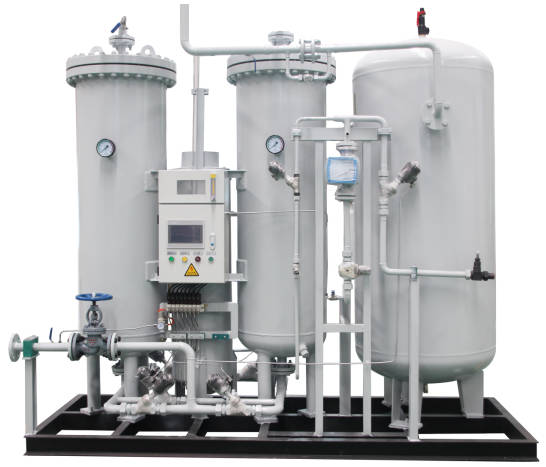
DINAK’s systems use a two-tower setup inside the nitrogen generator main unit. It has towers A and B packed with carbon molecular sieves. The system's automatic valve changes come from a PLC control. This creates a smooth PSA cycle that never pauses. The CMS fills are set up for the best contact area. That leads to strong gas separation. In practice, cycle times typically different depending on purity, flow rate, and operating pressure, capable of delivering stable nitrogen output, such as 50 Nm³/h at 99.9% purity under properly optimized operating conditions.
Control and Monitoring System
Today's work needs accuracy and hands-off running. DINAK meets this with a PLC-based control panel in each PSA unit. It runs on a PLC (Programmable Logic Controller) and a touch screen for full automatic work. You can set parameters, watch purity online, get smart alerts for issues, and save past data. This setup lets you check pressure, flow, and nitrogen purity in real time. So, performance stays even and reliable. Operators in fields like electronics often rely on this to spot small changes, allowing operators to detect deviations in nitrogen purity and take corrective action promptly.
Advantages of DINAK PSA Nitrogen Generators
Fast Start-Up Capability
Cryogenic plants need hours or days to cool before they work. But DINAK’s PSA generators start making useful nitrogen fast after turning on. This quick action helps a lot in areas with changing needs or sudden calls for gas. Take a food packing line, for example. If a batch runs low on nitrogen, the system ramps up fast to avoid downtime.
High Purity Output with Stability
DINAK’s PSA systems let you pick purity from 95% to 99.999% based on what you need. The nitrogen purity adjusts easily in that range to match real production demands. Smart PLC controls and steady CMS work keep purity levels firm, even when loads shift. In chemical plants, this means blanketing tanks with 99.99% nitrogen with a high level of operational safety of oxygen leaks causing reactions.
Energy Efficiency and Low Operating Cost
Against cryogenic or membrane systems, PSA nitrogen generators need less money to start and use less power day to day. They have fewer parts that move, and the tower switches happen on their own. So, upkeep stays low. Over a year, a typical 100 Nm³/h unit can typically reduce energy consumption by 30–50% compared to traditional cryogenic air separation or bottled nitrogen supply, depending on operating conditions, based on real factory runs.
Compact Design and Scalability
DINAK’s modular designs take up little room but still deliver strong output. The small modular shape needs just a bit of space. Setup and testing go quickly, so production starts soon. Flow rates go from 10 Nm³/h to 250 Nm³/h in our KYPN series. Adding more capacity proves simple as needs grow. A small workshop might start with a 20 Nm³/h model and scale to 100 Nm³/h by linking units, all without major rebuilds.
Applications Across Industries
Metal Fabrication and Laser Cutting
For laser cutting work, high-purity nitrogen makes neat cuts free of color changes from rust. PSA units give a steady supply for fast cutting lines. On a steel sheet line running 24/7, this ensures edges stay bright and precise, resulting in cleaner cut edges, improved surface quality, and higher overall production efficiency compared to air-based cutting.
Chemical Processing Plants
Nitrogen sees wide use in chemical sites for clearing pipes or covering risky materials. It handles chemical material protection, pipeline purging, and product nitrogen sealing. During a shutdown, PSA units can flush lines with 50 Nm³/h of nitrogen to safely remove residues without sparks.
Electronics Manufacturing
For making circuit boards and soldering jobs, clean nitrogen creates a no-oxygen space to block rust. It supplies high-purity shielding gases for SMT assembly and electronic part making. In a reflow oven, for example, 99.999% nitrogen prevents defects on sensitive chips during high-heat steps.
Conclusion
DINAK brings more than 20 years experience in gas separation technology. Our PSA nitrogen generators bring a forward-thinking, power-saving, and simple-to-use answer for factory nitrogen supplies. By using well-planned adsorption tower builds and smart control setups, DINAK delivers high-purity nitrogen output with firm reliability. Against old ways, PSA technology gives quicker starts, smaller running costs, and a better fit to changes. That makes it a great pick for fields wanting solid on-site gas making.
FAQ
Q: How pure is the nitrogen produced by a DINAK PSA generator?
A: DINAK PSA systems can produce nitrogen with purity levels ranging from 95% up to 99.999%, depending on application requirements.
Q: What maintenance is required for a DINAK PSA system?
A: Regular maintenance includes replacing filters in the pretreatment unit, checking valve operations, and periodic inspection of the carbon molecular sieve.
Q: Is a DINAK PSA generator suitable for small-scale operations?
A: Yes, DINAK offers modular designs that are scalable and space-efficient, making them ideal for both small-scale facilities and large industrial setups.
Q: Can a DINAK PSA system operate continuously?
A: Yes, thanks to the dual-tower design and automated cycling process, the system ensures continuous production without interruption.
-430x247.jpg)
内页小-430x246.jpg)