Gas purity is not a single specification that applies to every industrial process. The required oxygen, nitrogen or argon specification depends on the application, process conditions, product contact requirements, allowable impurity levels, flow rate, delivery pressure and supply continuity.
Selecting a purity specification below the process requirement may affect process performance or product quality. Conversely, specifying purity beyond the actual process requirement can affect recovery, process configuration, specific power consumption and overall project cost. At DINAK, we develop and manufacture complete gas processing, separation and liquefaction solutions. Our goal is to help industrial users evaluate gas requirements in a practical way and select a suitable air separation solution for their applications.
Why Gas Purity Matters
Process Quality and Safety
Oxygen, nitrogen and argon perform different functions in industrial production. Oxygen may support combustion, oxidation or metallurgical processes. Nitrogen is commonly used where an inert or controlled atmosphere is required. Argon is valued in applications where stable protection and low contamination are important.
Cost and Energy Balance
Gas purity can also influence the energy and operating requirements of an air separation plant. Producing gas beyond the actual needs of the downstream process may not create additional value. A better approach is to define the acceptable purity range based on the application, then evaluate the required capacity, pressure and operating schedule.
This balance is especially important for continuous industrial gas production. A suitable system should support the customer’s process without creating unnecessary production or energy requirements.
Define Your Gas Requirements
Purity and End Use
The first step is to identify the exact application. A steel plant, chemical facility, food manufacturer and electronics factory may all use nitrogen, but their process conditions and quality expectations can be different.
The gas specification should be linked to the part of the process where the gas is used. Important questions include:
- Is the gas used for combustion, protection or atmosphere control?
- Does the gas come into direct contact with the product?
- Is contamination control important?
- Does the process require continuous supply?
- Will the gas be used in one process or several production areas?
Clear answers help engineers avoid both under-specification and unnecessary over-specification.
Pressure and Flow
Purity alone does not define the product specification for an industrial gas plant. The design basis should also include normal and peak flow rates, delivery pressure, product form, load profile and operating hours. A gas with suitable purity may still fail to support production if it cannot reach the required point of use at the necessary flow rate.
The plant design should therefore consider peak demand, normal demand, pressure changes and the distance between the air separation plant and the production line. These conditions may influence the selection of a DINAK Industrial Gas Solution and the final configuration of the air separation system.
Supply Continuity
For continuous processes, the gas supply design should also consider plant availability, redundancy, buffer storage and backup supply arrangements. This is particularly important for furnaces, chemical processes and other operations where an interruption in gas supply can affect production continuity.
When evaluating a gas solution, users should consider how the plant will respond to changes in demand, planned production pauses and future expansion. A well-matched system can provide a more stable supply while helping the customer manage production requirements more effectively.
Match Oxygen Purity to Industry
Oxygen for Steel and Metals
Oxygen is widely used in steelmaking and non-ferrous metallurgy. In these applications, oxygen purity should be evaluated together with oxygen flow, pressure and the specific production process.
The oxygen specification should be established based on the metallurgical process, furnace or converter configuration, required oxygen flow rate, delivery pressure, operating profile and allowable impurity limits. The final specification may depend on furnace design, operating conditions and the role oxygen plays in the process.
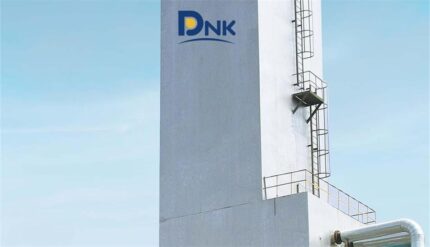
DINAK Large-Scale ASU is designed for industrial applications including steel smelting and non-ferrous metallurgy. The product is intended for customized project requirements, with consideration given to working conditions, gas production and operating performance.
Oxygen for Chemical Processes
In chemical and petrochemical plants, oxygen may be used for oxidation, oxygen-enriched combustion and other process-intensification applications. The design basis should define oxygen purity, flow rate, delivery pressure, turndown requirements and the process-specific impurity limits. The correct oxygen purity depends on the process chemistry, equipment design and required operating conditions.
Chemical plants should also evaluate whether oxygen demand is stable or changes with production. A suitable air separation plant should be selected according to actual demand rather than a general industry assumption.
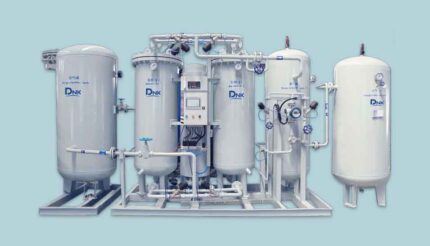
DINAK Gaseous ASU is an air separation solution for applications requiring continuous gaseous oxygen and nitrogen supply.
Oxygen for Other Industries
Oxygen is also used in water treatment, pulp and paper, and food processing and applications. For regulated applications such as food-grade gases, the required product specification and applicable regulatory standards should be defined separately during project engineering. Each application has its own process requirements, so the correct purity should be confirmed with the end user’s technical team.
Match Nitrogen Purity to Industry
Nitrogen for Chemical Plants
Nitrogen is often used to create a controlled atmosphere, reduce unwanted contact with oxygen or support process protection. In chemical plants, the required purity may depend on the sensitivity of the materials and the specific operating environment.
Users should define the required nitrogen purity together with flow, pressure and operating continuity. This allows the air separation solution to be evaluated as part of the complete chemical production system.
Nitrogen for Food and Electronics
Food processing and electronics manufacturing may have strict requirements concerning contamination and process stability. Nitrogen purity should be selected according to how the gas is used, whether it contacts the product and how sensitive the process is to impurities.
A higher purity level is not automatically the best choice for every application. The correct specification should support product quality while remaining suitable for the customer’s production and operating conditions.
Nitrogen for Oil and Gas
In oil and gas facilities, nitrogen is commonly used for inerting, purging, pressure testing and maintenance-related operations. The required nitrogen specification depends on the hydrocarbon service, oxygen tolerance, operating pressure, flow demand and required duration of continuous or intermittent supply. Site conditions, operating pressure, flow demand and production continuity should all be included in the project assessment.
For applications with changing demand, a solution with appropriate operating flexibility may be more practical than a system designed only for one fixed condition.
Match Argon Purity to Industry
Argon for Steel and Metals
Argon is important in metal processing because it can provide a controlled atmosphere during selected production stages. In steel and non-ferrous metal applications, argon purity should be matched with the process, material quality requirements and expected gas consumption.
The supply system should also provide stable flow and pressure. A purity specification has limited value if delivery conditions are inconsistent.
Argon for Chemical Applications
Argon is used in selected chemical processing and specialty manufacturing applications where an inert atmosphere and tight control of reactive impurities are required. These projects normally require a detailed understanding of the production environment before the final gas specification is confirmed.
DINAK Industrial Gas Solutions can be evaluated for projects that require oxygen, nitrogen, argon or a combination of industrial gases.
Control Contamination Carefully
When choosing argon purity, users should identify the impurities that may affect their process. The relevant concern is not only the stated purity level, but also whether the gas supply can remain consistent under actual operating conditions.
Conclusion
Matching oxygen, nitrogen and argon purity with industrial applications requires more than selecting the highest available specification. The practical solution is to evaluate purity together with the process, pressure, flow, continuity, production scale and future demand.
At DINAK, we provide customized air separation and industrial gas solutions based on each project’s requirements. With products including DINAK Large-Scale ASU, DINAK Gaseous ASU, DINAK Full Liquid ASU and DINAK Small-Scale ASU, we help industrial users develop a gas supply system suited to their production goals.
Contact DINAK today for a customized oxygen, nitrogen or argon solution matched to your industrial application.
FAQ
Q: How do I choose the right oxygen purity for industrial use?
A: Define the oxygen’s end use, required flow, pressure and process conditions first. Oxygen purity should be matched to the actual requirements of steelmaking, chemical processing, metallurgy or another application.
Q: What nitrogen purity is needed for industrial applications?
A: The required nitrogen purity depends on whether the gas is used for process protection, atmosphere control, food processing, electronics manufacturing, chemical production or oil and gas applications. Purity should be evaluated together with flow and pressure.
Q: Can DINAK provide a complete oxygen, nitrogen and argon solution?
A: Yes. DINAK can evaluate customized air separation solutions for projects requiring oxygen, nitrogen, argon or a combination of these gases. The appropriate product and configuration depend on the customer’s application, capacity, purity, pressure and operating conditions.
-430x247.jpg)
内页小-430x246.jpg)