An Air Separation Unit (ASU) for fertilizer complexes can supply nitrogen as feed gas for ammonia synthesis and as utility nitrogen for purging, inerting, blanketing, sealing and equipment protection. Oxygen may also be required for selected nitric acid, combustion or other chemical-process applications, depending on the plant configuration. ASU selection depends on the fertilizer complex configuration, including ammonia synthesis, nitric acid production, downstream fertilizer units, nitrogen and oxygen demand, product form, purity, pressure, utilities, operating profile and process interfaces.
Where Can Oxygen Support Fertilizer Production?
Process-Unit Requirements
Oxygen may be required for selected nitric acid production, oxygen-enriched combustion or other approved chemical-process applications, depending on the fertilizer-complex configuration. The project basis should describe the duty, quality, pressure, receiving equipment, and controls for each user.
Oxygen Supply for Nitric Acid Production
In fertilizer complexes that include nitric acid production, oxygen requirements should be evaluated according to the specific nitric acid process, plant capacity, oxygen-enrichment requirements and operating conditions. The ASU specification should define oxygen flow, purity, delivery pressure and battery-limit conditions for the nitric acid plant.
Product Delivery Conditions
Oxygen purity, flow rate and delivery pressure should be defined at the agreed battery limit, together with the measurement point and acceptance criteria. Routing, isolation, pressure control, and the receiving system can affect the product delivered to the process. Clear measurement responsibility keeps the ASU and plant teams aligned.
What Nitrogen Applications Matter in Fertilizer Plants?
Equipment Inerting
Nitrogen can be used to establish an inert atmosphere in selected fertilizer-process equipment, reducing the risk of air ingress and supporting safe operation, shutdown and maintenance procedures. The specification should state equipment, operating condition, purity, pressure, and control responsibility so supply is tied to a real fertilizer-plant duty.
Pipeline and Vessel Purging
Nitrogen can be used for pipeline and vessel purging during startup, shutdown, maintenance, equipment isolation and approved process transitions. Required purge flow, duration, pressure and nitrogen purity should be defined for each equipment group based on equipment volume, connection layout and the required condition before the next operation.
Sealing and Blanketing
Suitable fertilizer equipment may use nitrogen for sealing or blanketing. Demand can be continuous or event-driven, and multiple users may operate together. Priority users and schedules should be recorded during gas planning.
How Is Nitrogen Used in Ammonia Production?
Nitrogen is a primary feed gas for ammonia synthesis in a Haber-Bosch ammonia plant. An ASU can supply nitrogen at the required purity, pressure and flow rate, while the final specification depends on the synthesis-loop configuration, hydrogen source, gas purification system and plant operating conditions. Nitrogen specifications for ammonia synthesis should be distinguished from utility-nitrogen requirements, as process feed gas may require tighter impurity limits and more stringent supply conditions.
How Does the ASU Interface With an Ammonia Plant?
For an integrated fertilizer complex, the ASU-to-ammonia-plant interface should define nitrogen flow, purity, pressure, temperature, metering, control signals and battery limits. The nitrogen supply philosophy should also consider startup, normal operation, turndown, shutdown and backup-gas requirements.
How Should Multiple Fertilizer-Plant Gas Users Be Planned?
Identify Essential Users
Separate process-critical duties from secondary and temporary requirements. This establishes a clear design basis and allows process-critical gas users to be prioritized during normal and abnormal operating conditions.
Map Simultaneous Demand
Several process units may operate at the same time, while maintenance or changeovers can create different gas patterns. Record simultaneous users, peak demand conditions and temporary operating cases to establish the complete gas load profile.
Define Interface Responsibilities
Identify the team responsible for each pipeline boundary, valve group, measurement point, and release decision. Clear ownership helps the ASU team, process operators, and utility personnel act from the same operating basis.
What Should a Fertilizer Plant Define Before Selecting an ASU?
Product Type and Form
Identify whether the fertilizer complex requires gaseous oxygen (GOX) and gaseous nitrogen (GAN) for process use, or liquid oxygen (LOX) and liquid nitrogen (LIN) for storage, backup or distribution. Product form affects delivery, distribution, and operating responsibilities.
Quality and Delivery Pressure
Define gas purity, impurity limits, moisture/dew-point requirements, flow rate and delivery pressure at the agreed fertilizer-plant battery limit. Values copied from another complex may not reflect the new process or equipment. DINAK can assess documented requirements during engineering.
Operating Schedule
Document normal, peak and minimum gas demand, together with startup, shutdown, maintenance and campaign conditions. The ASU should be evaluated against the complete load profile and required turndown rather than a single theoretical maximum.
Utilities and Site Conditions
Electrical power supply, cooling-water availability, ambient temperature, altitude, access, installation conditions, pipeline routing and downstream interfaces influence ASU planning. Review these factors with operations and engineering personnel before finalizing the system.
Which DINAK ASU Type Fits Fertilizer Production?
Gaseous ASU for Process Units
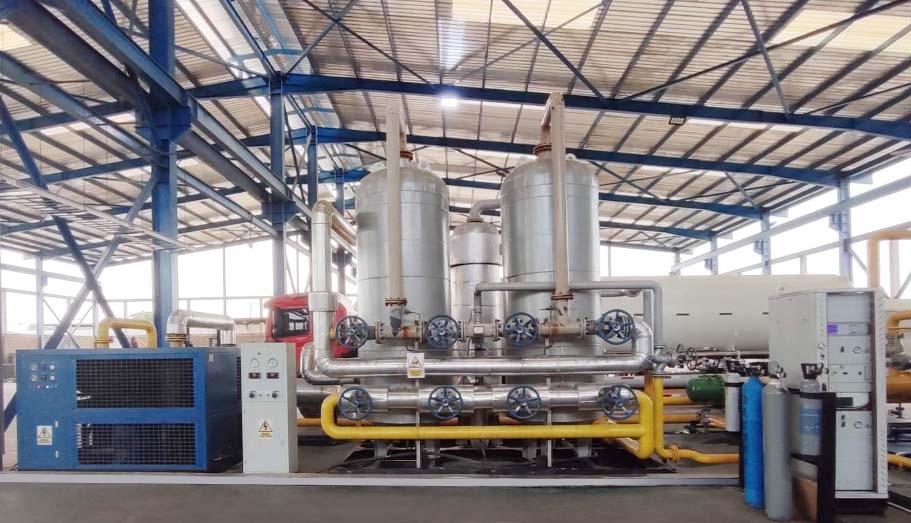
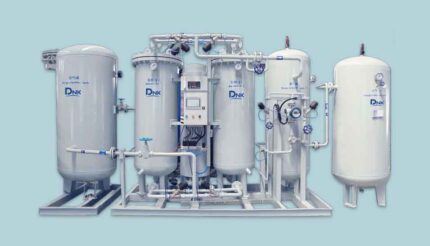
DINAK’s Gaseous ASU category is a non-cryogenic gas-separation solution for applications requiring gaseous oxygen and/or nitrogen. The project basis should define demand, quality, pressure, utilities, interfaces, and operating priorities before selection.
Large-Scale ASU for High-Capacity Complexes
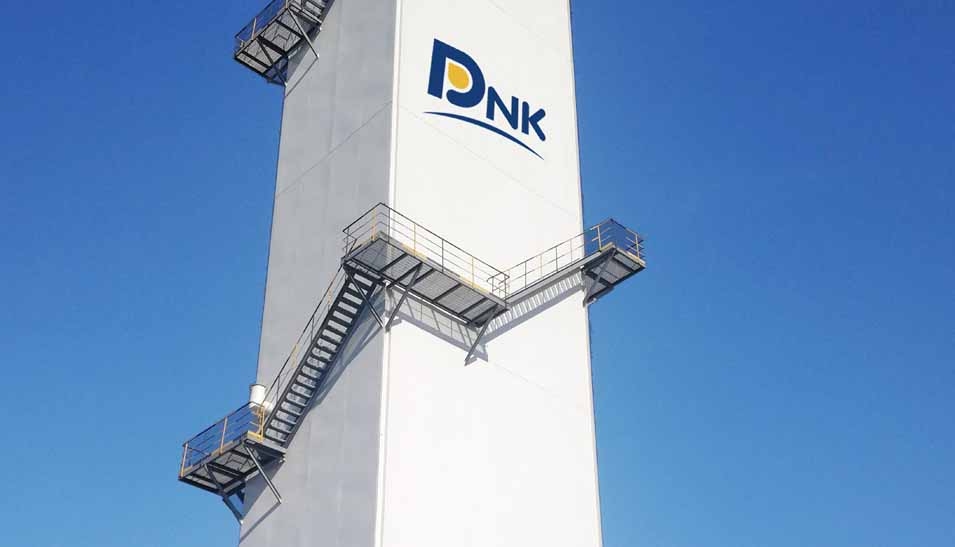
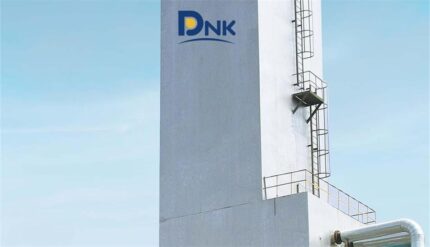
DINAK’s Large-Scale ASU is a cryogenic air-separation option for high-volume oxygen, nitrogen and argon production. It can be evaluated for large fertilizer complexes where ammonia-synthesis nitrogen demand, oxygen requirements and other product streams justify a multi-product cryogenic configuration. Selection should follow the complex’s product balance, connected users, operating conditions, and site interfaces. No universal capacity claim should be assumed.
Full-Liquid and Small-Scale Options
DINAK’s Full Liquid ASU is primarily intended for liquid oxygen and liquid nitrogen production, with optional gaseous output and argon configurations available for selected applications. Liquid products may also support on-site storage and backup gas supply where required by the plant’s gas-supply philosophy. DINAK Small-Scale ASU uses cryogenic air-separation technology for on-site production of high-purity oxygen and nitrogen. It can be considered for lower-capacity fertilizer or chemical applications where required flow, purity and pressure fall within the unit's design range.
Key ASU Selection Considerations for Fertilizer Plants
Using a Generic Chemical-Plant Specification
Fertilizer complexes differ in process route, products, utilities, and gas users. A generic chemical-industry specification may not reflect the nitrogen feed requirements of ammonia synthesis, oxygen requirements of connected process units, or the actual utility-gas load profile. The ASU should follow the actual fertilizer-production duty documented by the owner.
Ignoring Temporary Gas Duties
Maintenance turnarounds, startup, shutdown, purging, equipment isolation and restart conditions can create gas-demand patterns that are not visible during normal production. Document these conditions so the gas system reflects the complete operating picture.
Backup Nitrogen and Supply Reliability
For fertilizer complexes where nitrogen is a critical ammonia-synthesis or utility gas, the gas-supply philosophy should consider ASU availability, backup nitrogen sources, liquid-nitrogen storage, emergency supply and critical-user prioritization.
Common Claims to Avoid
Unsupported Production Improvements
Avoid promises about fertilizer output, feedstock savings, energy reduction, emissions, or product quality. Such outcomes depend on the complete process and must not be presented as universal ASU results.
Universal Configuration Assumptions
The suitable ASU depends on documented fertilizer-plant conditions. Product form, gas users, utilities, pressure, quality, and operating schedules should guide the configuration discussion.
Conclusion
An Air Separation Unit for fertilizer plants should be selected around actual oxygen and nitrogen duties, product form, quality, pressure, utilities, process interfaces, simultaneous users, and operating schedules. DINAK’s ASU configurations can be evaluated against the fertilizer complex’s nitrogen and oxygen demand, product specifications, load profile, utilities and process interfaces to establish a project-specific gas-supply solution. Explore DINAK’s industrial air separation solutions for your fertilizer-production gas requirements.
FAQ
Q: What is an Air Separation Unit used for in fertilizer plants?
A: A cryogenic ASU separates atmospheric air into oxygen, nitrogen and argon through cryogenic distillation, while non-cryogenic systems can produce selected gaseous oxygen or nitrogen products using other separation technologies. In fertilizer complexes, nitrogen can be supplied as feed gas for ammonia synthesis as well as for inerting and purging, while oxygen may support selected nitric acid or other chemical-process applications.
Q: Why do fertilizer plants require nitrogen?
A: Nitrogen is required in fertilizer complexes primarily as a feed gas for ammonia synthesis, where it reacts with hydrogen in the Haber-Bosch process. Nitrogen is also widely used for inerting, purging, blanketing, sealing and equipment protection. The required purity, pressure and flow depend on the process and plant configuration.
Q: When is a gaseous ASU suitable for fertilizer production?
A: A gaseous ASU may suit a fertilizer complex mainly requiring gaseous oxygen and nitrogen for connected process units. The project should define product quality, pressure, demand, utilities, interfaces, and operating priorities before selecting the final configuration for the site.
-430x247.jpg)
内页小-430x246.jpg)