An Air Separation Unit (ASU) can provide continuous gaseous nitrogen for selected photovoltaic and lithium-ion battery material processes. The required nitrogen purity, residual oxygen content, dew point, flow rate, delivery pressure, and operating profile depend on the specific process route and material chemistry. DINAK provides gaseous and large-scale ASU categories that can be evaluated against these project conditions, together with engineering, installation, commissioning, and staff-training support.

Which Photovoltaic and Battery Material Processes Use Nitrogen?
Photovoltaic silicon production
Nitrogen and argon requirements vary by production stage, furnace or crystal-growth technology, and process atmosphere. The nitrogen system must fit the actual process sequence and the way the factory operates each production line. A plant should define the required nitrogen specification at each point of use before deciding how the air separation equipment and distribution header will be configured.
A stable industrial nitrogen supply connects the ASU with the nitrogen distribution piping, isolation valves, instrumentation, and points of use. The equipment plan should be developed alongside the process layout.
Lithium-Ion Battery Material Production
Selected lithium-ion battery material processes may require nitrogen or other controlled process atmospheres, depending on the material chemistry, thermal-treatment route, and process conditions. The nitrogen demand profile should include minimum, normal, peak, start-up, and future expansion requirements, together with the required turndown range.
Nitrogen supply should be discussed as part of a controlled industrial manufacturing environment. Final specifications must be determined by the factory's process design and technical acceptance requirements.
What Must the Nitrogen Supply Match?
Protective-atmosphere requirements
The manufacturing process determines the required nitrogen purity, residual oxygen level, moisture content or pressure dew point, delivery pressure, flow rate, and monitoring requirements. These conditions should be written into the project design basis and linked to the relevant production areas. A generic statement that nitrogen is high purity is not enough for an equipment decision.
The control philosophy should define alarm limits, interlocks, operator actions, and escalation responsibilities. This links ASU control functions with plant operating procedures. It also prevents a supplier from making assumptions about requirements that the user has not defined.
Production-line demand pattern
Nitrogen demand is shaped by the number of production lines, their operating hours, individual batch timing, and the possibility of several users drawing gas at once. Future expansion capacity should be identified as a design assumption and incorporated into the capacity and utility margin where required.
The ASU and nitrogen distribution system should be designed around the battery limit, pipeline routing, design flow, pressure drop, control-valve arrangement, and point-of-use pressure requirements. Header routing, pressure drop, flow distribution, isolation philosophy, and instrument locations are part of the system design. A well-defined demand profile provides the basis for equipment sizing, performance specifications, and technical acceptance criteria.
How Does a Gaseous ASU Fit the Plant?
From nitrogen production to the distribution header
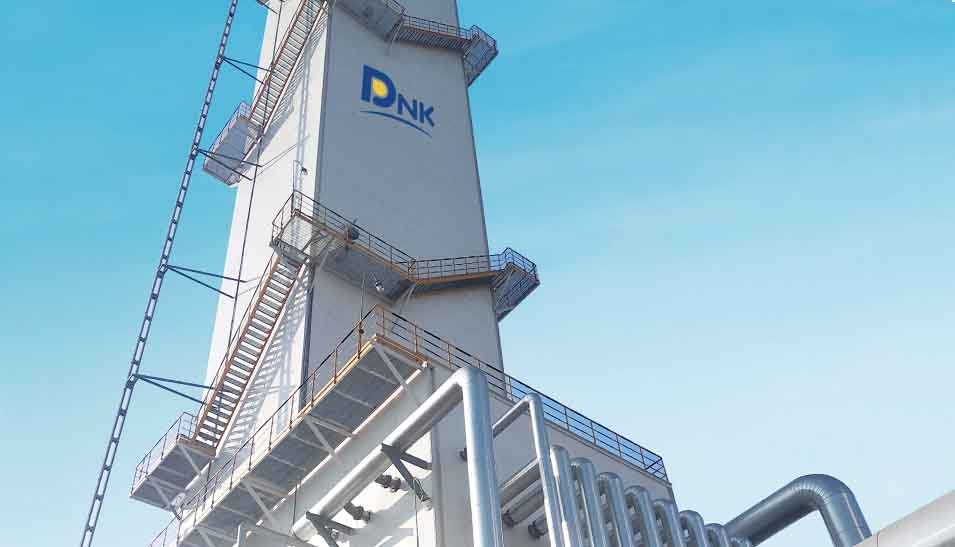
DINAK offers gaseous ASU configurations for on-site oxygen and nitrogen production to the factory network. DINAK offers gaseous ASU configurations for on-site oxygen and nitrogen production, with process and pressure configurations selected according to project requirements. For photovoltaic and battery-material applications, nitrogen is normally the product stream that must be matched to the manufacturing header and point-of-use connections.
The delivery route should show the battery limit between ASU equipment and the plant network. It should identify nitrogen distribution piping, control valves, measurement points, isolation arrangements, and the responsible operating team. These details help prevent interface gaps during installation and commissioning.

Controls, monitoring, and operating interfaces
Depending on the project configuration, ASU control and monitoring can be integrated with the plant DCS or PLC system. The project should define which operating data are required at the control level and how alarms are communicated to the plant. Nitrogen supply control should be coordinated with the factory's own operating procedures rather than treated as a separate equipment function.
This coordination is particularly important when several production areas share one nitrogen header. Clear responsibilities for normal operation, planned shutdown, start-up, and abnormal conditions help the facility manage gas supply as part of the wider manufacturing system.
Which Design Inputs Shape the ASU?
Gas quality, pressure, and future demand
The ASU technical specification should define nitrogen purity, residual O₂, moisture or pressure dew point, flow rate, delivery pressure, temperature, and allowable pressure variation at the battery limit. These inputs influence product delivery and pipeline design. They should be confirmed by the plant rather than inferred from another industrial application.
Utilities, layout, and site conditions
Key site inputs include electrical power, cooling water, instrument air, ambient temperature, site elevation, raw-air conditions, foundation requirements, equipment footprint, access, drainage, and plant utility interfaces. The pipeline route to the electronics-material process should be considered at the same time as the equipment location. Equipment layout should also account for maintenance access, lifting requirements, inspection space, and piping interfaces.
Future capacity expansion should be defined through an agreed expansion philosophy, such as reserved plot space, pipeline tie-in points, utility margins, or provision for additional production capacity. It should not be presented as an automatic capability of every project.
How Can DINAK Support Project Planning?
Selecting a gaseous or large-scale ASU configuration
DINAK offers several air-separation and industrial nitrogen configurations, including Gaseous ASU, Large-Scale ASU, Small-Scale ASU, Full Liquid ASU, and Ultra Nitrogen Plant solutions. For projects with sustained high gas demand, a large-scale ASU may be evaluated based on nitrogen capacity, oxygen and argon co-production requirements, product purity, operating profile, and utility availability. Final selection must follow the documented process requirements, product form, pressure, utilities, and site interfaces.
Engineering, installation, commissioning, and training
DINAK provides engineering, project management, construction and assembly support, together with installation/commissioning assistance and technical training, depending on the project scope. For an electronics-material nitrogen project, the responsibilities for utilities, civil works, distribution piping, controls, process interfaces, testing, and handover should be clearly divided.
Commissioning should confirm the agreed operating conditions and the interface between the ASU and plant network. Training should cover the supplied equipment, operating procedures, routine maintenance, alarm response, and responsibilities defined in the project scope. The factory's internal process procedures remain a separate responsibility of the production owner.
Electronics-Material Nitrogen Planning Matrix
This matrix connects each manufacturing question with the information that should be available before the ASU design is finalized.
| Project question | Information to define | Effect on ASU planning | DINAK discussion point |
| Which material process uses nitrogen? | Process purpose and operating schedule. | Defines demand and distribution interfaces. | Product-gas and interface review. |
| What gas condition is required? | Quality, pressure, dryness, and monitoring needs. | Shapes product delivery and controls. | Technical design basis. |
| How does demand vary? | Normal, peak, and future demand assumptions. | Shapes production and header planning. | Gaseous or large-scale ASU fit. |
| What site conditions apply? | Utilities, footprint, access, and connection points. | Affects equipment integration scope. | Engineering and installation boundary. |
| How is acceptance defined? | Tests, records, and operating responsibilities. | Defines commissioning and handover basis. | Training and acceptance planning. |
Conclusion
For photovoltaic and lithium-ion battery material projects, nitrogen supply should be specified from the process outward: first define the required atmosphere and gas quality, then establish normal and peak demand, and finally evaluate the appropriate ASU configuration, utilities, distribution system, and acceptance criteria. DINAK can support this project definition through an integrated engineering and execution scope.
Explore DINAK project services to start a process-led technical planning discussion.
FAQ
Q: Where is nitrogen used in photovoltaic and battery material manufacturing?
A: Nitrogen can be used as a process or inerting gas in selected manufacturing steps, but the required atmosphere depends on the specific material chemistry and process route.
Q: Can a gaseous ASU support photovoltaic silicon production?
A: A gaseous ASU can be considered when photovoltaic silicon production requires continuous nitrogen through a plant distribution network. Suitability depends on the process atmosphere requirements, demand pattern, pressure, utilities, site interfaces, and monitoring plan. The final solution should be evaluated against the plant's own operating conditions.
Q: What data is needed to plan nitrogen for battery-material production?
A: The project team should prepare the process purpose, required nitrogen condition, normal and peak demand, operating schedule, point-of-use pressure, pipeline layout, utilities, footprint, controls, and acceptance criteria.
Q: How can DINAK support an industrial nitrogen project?
A: DINAK documents gaseous and large-scale ASU categories, plus engineering, project management, construction, assembly, installation, commissioning, and staff training. The best starting point is a defined process brief covering gas requirements, plant interfaces, utilities, operating responsibilities, and project acceptance conditions.
-430x247.jpg)
内页小-430x246.jpg)