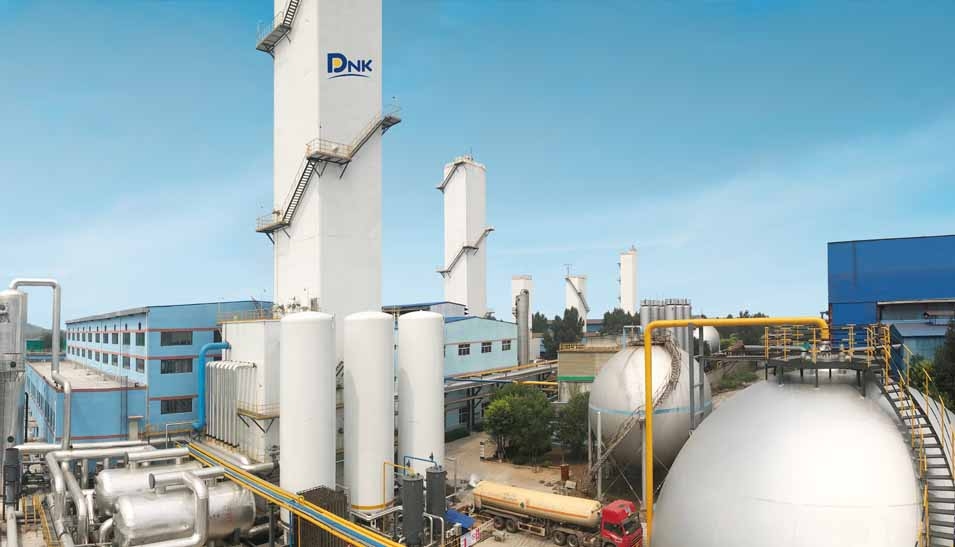
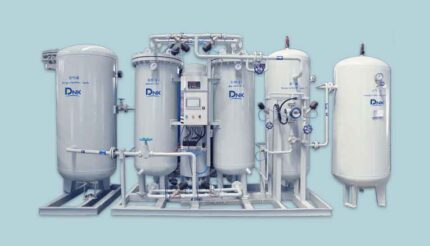
An Air Separation Unit (ASU) separates atmospheric air into oxygen, nitrogen, and, in some configurations, argon through cryogenic distillation. These industrial systems start by preparing and compressing the air. After that, they chill it to extremely cold temperatures. By using cryogenic distillation technology, the process separates air components by exploiting differences in boiling points and relative volatility during cryogenic distillation. This method provides a steady flow of gas or liquid products. These are vital for steelmaking, metal work, chemical plants, and various industrial gas needs.
An Air Separation Unit (ASU) is an integrated industrial process system consisting of multiple subsystems for air compression, purification, cryogenic cooling, distillation, and product delivery. It features several subsystems responsible for air intake, filtration, pre-purification, cryogenic processing, and product distribution. Other parts manage deep cooling, distillation, and final delivery. Because of this unified design, the plant can generate gas constantly. This helps meet the high needs of a factory much better than waiting for separate truck deliveries.
Cryogenic air separation works best when a site requires massive amounts of gas or very pure oxygen. It is also the right choice if you need to make oxygen and nitrogen at the same time or collect argon. A gaseous ASU focuses on sending gas through pipelines. On the other hand, a full liquid ASU creates mostly liquid oxygen and liquid nitrogen. Therefore, the type of product you choose should match your specific work process, how you store the gas, and how you plan to move it.
How Does an Air Separation Unit Work?
Air Intake, Compression, and Pre-Purification
The process begins with atmospheric air. Filtration removes suspended particles before the feed air is compressed and cooled. A pre-purification stage then removes water, carbon dioxide, and other contaminants that could freeze at low temperature, restrict passages, or disturb stable operation.
This conditioning stage is essential because the downstream heat exchangers and fractionating column operate at cryogenic temperature. The purification system is treated as part of the overall ASU process, not as a separate product focus. Its duty is to deliver clean, dry feed air under the conditions required by the selected plant design.
Cryogenic Cooling and Heat Exchange
The purified air passes through the main heat-exchange section, where returning cold product and waste streams cool the incoming feed. The compressed purified air is cooled close to its liquefaction temperature before entering the distillation column system. Careful heat integration limits avoidable thermal losses and establishes the liquid and vapor flows needed for stable rectification.
Separation Inside the Fractionating Column
Inside the fractionating column, rising vapor contacts descending liquid through a series of mass-transfer stages. Nitrogen, which is more volatile, becomes concentrated toward the upper section, while oxygen becomes richer in the lower section. Repeated vaporization and condensation sharpen the separation; the process is therefore low-temperature distillation rather than simple filtration.
Main Types of Industrial Air Separation Units
Large-Scale ASU
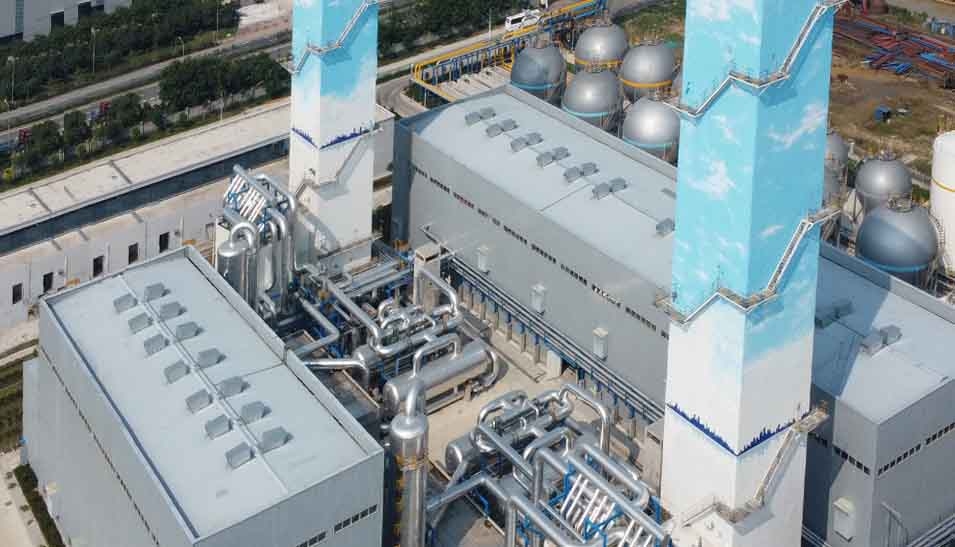
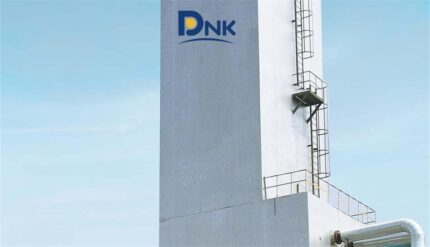
A DINAK Large-Scale ASU is designed for high-capacity industrial gas demand and a broad load-adjustment range. Large-scale ASUs are typically designed for oxygen production capacities ranging from several thousand to hundreds of thousands of Nm³/h depending on industrial requirements. DINAK provides customized large-scale ASU configurations according to required capacity and operating conditions.
The product includes skid-mounted main sections, automated operation, and customization according to working conditions and energy requirements. These characteristics are relevant to continuous steel, non-ferrous metal, chemical, and petrochemical facilities where production scale and stable gas supply must be considered together.
Gaseous ASU
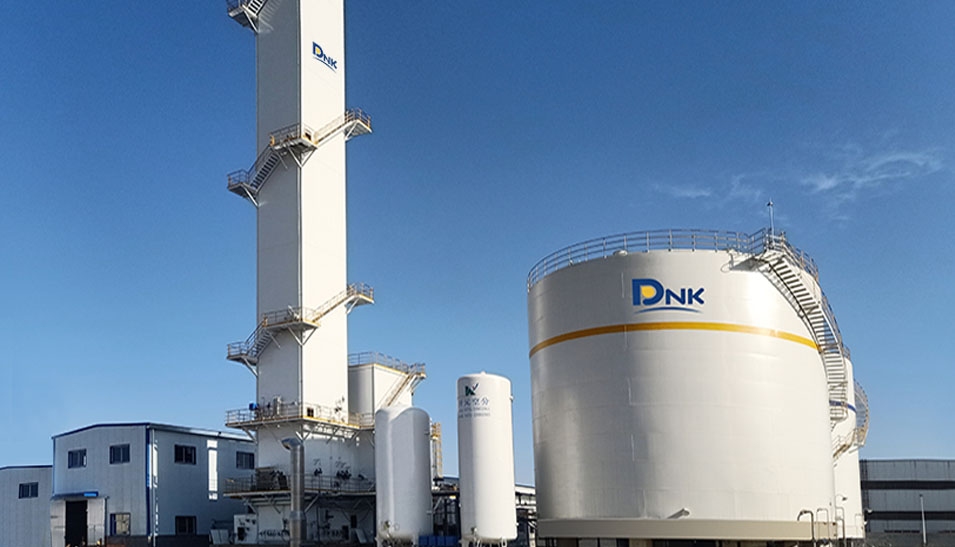
DINAK Gaseous ASU solutions focus on gaseous oxygen and nitrogen delivery, with argon available in suitable configurations. The published product information includes an ultra-low-pressure process in which the raw-air compressor operating pressure can be as low as 0.43 MPa under specific conditions. It also describes an internal-compression process capable of oxygen and nitrogen delivery pressures up to 8.5 MPa.
These figures are configuration-specific reference values, not universal performance guarantees. Required pressure should be established from the downstream process before the ASU flow scheme is selected. Overspecifying pressure or purity can add unnecessary complexity, while underspecifying either can compromise plant integration.
Full Liquid ASU
A DINAK Full Liquid ASU directly produces liquid oxygen and liquid nitrogen, with little or no gaseous output in a typical configuration. DINAK lists low-pressure circulation, low-pressure circulation with low-temperature chilling, medium-pressure circulation, and medium-pressure double-expansion as available process categories. This type suits industrial gas distribution or production sites whose primary requirement is liquid product.
Industrial Applications of an Air Separation Unit
Steel and Non-Ferrous Metallurgy
Steel plants use oxygen to support refining and oxygen-enriched combustion, while nitrogen can support purging, inerting, and process protection. Argon is valuable in selected refining and metallurgy operations where controlled stirring or an inert atmosphere is required. An integrated ASU can align these product streams with continuous production demand.
Chemical and Petrochemical Processing
Chemical and petrochemical facilities may use oxygen in oxidation or gasification duties and nitrogen to displace air, purge pipelines, or maintain inert conditions. In these environments, the selection decision involves more than nominal capacity. Product pressure, purity, operating profile, backup philosophy, and interfaces with the main process all affect the appropriate ASU configuration.
Industrial Gas Production
Industrial gas producers often need a deliberate balance between gaseous pipeline supply and liquid products for regional distribution. A gaseous plant, full liquid plant, or combined product scheme may therefore be appropriate. The decision should reflect average and peak demand, product mix, distribution distance, and the flexibility required across changing operating conditions.
How to Choose the Right Air Separation Unit
Define Product Form, Capacity, and Load Profile
Begin with a realistic demand profile for oxygen, nitrogen, and argon rather than a single peak figure. Separate normal, minimum, and peak consumption, then identify whether each product is required as gas or liquid. This creates a clearer basis for evaluating plant capacity and load adjustment without relying on a generic standard configuration.
Match Purity and Delivery Pressure to the Process
Purity and pressure should be defined at the plant interface and tied to the actual downstream duty. Excessively high purity or pressure requirements can increase energy consumption and capital cost without providing additional process benefits. DINAK can match the process configuration to verified operating requirements, while published parameters remain reference points that must be assessed against site-specific conditions.
Evaluate Site Integration and Operating Conditions
Site altitude, climate, cooling conditions, utility availability, installation space, automation level, and expected load changes can influence ASU design. A sound selection process also reviews how the unit will connect to pipelines and downstream users. For DINAK solutions, these factors help determine whether a large-scale, gaseous, or full liquid configuration provides the most suitable industrial fit.
Conclusion
An Air Separation Unit converts ordinary atmospheric air into dependable industrial oxygen, nitrogen, and optional argon through feed-air conditioning, cryogenic cooling, and low-temperature rectification. Its value comes from matching the separation process, product form, capacity, purity, and pressure to the real production duty. DINAK’s large-scale, gaseous, and full liquid solutions give industrial operators a verified starting point for achieving that match.
Explore DINAK’s industrial air separation solutions to identify the configuration that best supports your plant’s operating requirements. Contact us today!
FAQ
Q: How does an Air Separation Unit separate oxygen and nitrogen?
A: The unit compresses and purifies atmospheric air, cools it until part of the stream liquefies, and feeds it to a fractionating column. Repeated vapor-liquid contact concentrates the more volatile nitrogen toward the upper section and oxygen toward the lower section. Product streams are then withdrawn at points selected for the required specification.
Q: What is the difference between a gaseous ASU and a full liquid ASU?
A: A gaseous ASU is configured mainly to deliver oxygen and nitrogen as gas at the pressures needed by connected industrial users. A full liquid ASU primarily produces liquid oxygen and liquid nitrogen, with little or no gaseous product in a typical design. Distribution method and downstream demand determine which format is more appropriate.
Q: Which factors determine the right ASU configuration?
A: Key factors include required oxygen, nitrogen, and argon flow; gas or liquid product form; purity; delivery pressure; normal and peak loads; site climate and altitude; available utilities; installation space; and process continuity. These inputs should be evaluated together because changing one requirement can affect the overall process configuration.
-430x247.jpg)
内页小-430x246.jpg)