Storing and moving liquefied gases like oxygen, nitrogen, and argon plays a key role in today's industrial work. In fields where a small problem can cause major stoppages or serious dangers, the strength of storage gear must be solid.
At DINAK, our team has dedicated more than 20 years to improving gas processing, separation, and liquefaction technology. We know that a cryogenic double-walled tank (also called cryogenic liquid vacuum storage tank) goes beyond a simple holder. It stands as a detailed engineering product built to hold very low temperatures and deliver top safety during use.
The Essential Engineering of Cryogenic Storage
Core Structural Design Principles
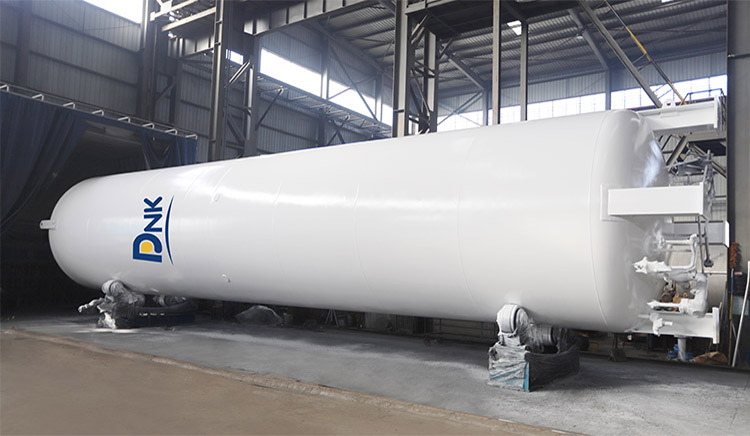
Keeping cryogenic liquids demands a setup that handles huge strains from sharp temperature changes. Our cryogenic liquid vacuum storage tank features a smart "tank-within-a-tank" build. This two-layer setup includes an inner container and an outer cover. We design them to hold liquefied gases from setups such as our full liquid ASU or large-scale ASU. The main aim here is to form a safe space where the liquid stays steady at its boiling point. In this way, it avoids quick vapor loss and rising pressure.
The Dual-Shell Protection Mechanism
The link between the inner and outer parts forms the base of safety in cryogenic double-walled tanks. The inner tank functions as the primary containment vessel, directly holding the cryogenic material. Around it sits the outer tank, which works as a guard and keeps the vacuum space between them. At DINAK, we pair this dual-shell setup with a full pipe network and special safety tools. As a result, it adds several backup layers to shield your site and workers.
Engineering for Maximum Structural Durability
Material Selection for Cryogenic Temperature Resistance
Lasting strength starts with picking materials that stay tough in very cold conditions. For the inner part of our cryogenic liquid vacuum storage tank, we choose top-quality stainless steel. This material offers great resistance to cold shocks and holds up well over time. For the outer part, we select sturdy options like carbon steel or stainless steel. These provide the needed support for the liquid's weight and the push from outside air against the inner vacuum.
Precision Welding and Quality Fabrication
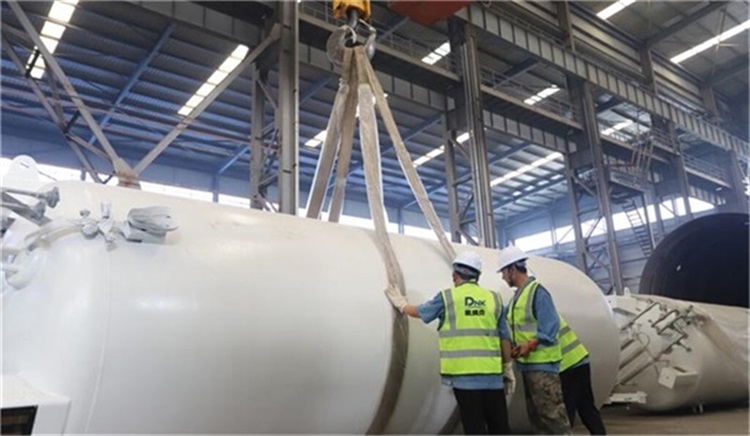
The lasting power of cryogenic double-walled tanks relies a lot on how well they are made, especially the weld joints. We use tough checks during building to confirm that each joint can handle the repeated stretching and shrinking from cold cycles. Our background in making ASU Components has helped us perfect our joining methods to meet worldwide benchmarks. Thus, our gear provides a long working life across the full plant cycle.
Superior Insulation Technology at DINAK
High-Vacuum Interlayer Performance Factors
The key to good work in cryogenic double-walled tanks lies in the quality of the insulation. We must reduce thermal conductivity to stop the unwanted boiling of gases. We do this by forming a strong vacuum in the space between the inner and outer tanks. Pulling out air particles greatly lowers heat movement through air currents or direct contact.
Optimizing Specialized Insulation Materials
The vacuum alone is not enough. We also add targeted insulation items in the space to block heat from radiation. This layered method makes sure that, even in warm surroundings, the liquid in our cryogenic liquid vacuum storage tank holds its required temperature maintenance. Our skill in providing varied options and custom fits lets us adjust these layers to fit exact site conditions and daily tasks.
Comprehensive Safety and Monitoring Systems
Integrated Pressure Management Accessories
Safety drives everything we do. This shows in the safety tools built into each cryogenic liquid vacuum storage tank. Our tanks come with detailed pipe setups that feature main and backup pressure release valves, rupture disks, and check meters. These parts team up to handle any shifts in inside pressure, often from outside heat sneaking in. They manage it in a safe, automatic way.
Remote Diagnostics for Real-Time Safety
Today's tech boosts both strength and safety through smart features. We provide remote monitoring and diagnostics services to track system health and detect issues early. By tracking vacuum strength and pressure patterns from afar, our specialists can catch problems before they grow. This forward-thinking way cuts down on-site checks and raises overall output and safety in your gas setup.
Maintenance Strategies for Tank Longevity
Proactive Rehabilitation and Inspection Programs
A tank breakdown can bring hidden costs that hurt gas plant budgets. Sudden halts in cryogenic double-walled tanks might stop work across the whole site. To avoid that, we provide full maintenance agreements with routine checks and early fixes. Our site leads tailor these plans to your exact needs.
Professional Training for Safe Operations
The best gear still needs skilled hands to run it right. We run Technical training sessions for new and seasoned staff. These cover theory and hands-on skills for cryogenic gear care. When your team grasps the details of handling a cryogenic liquid vacuum storage tank, it brings more safety to daily tasks and boosts your investment value.
Conclusion
At DINAK, we hold that safety and strength in cryogenic double-walled tanks come from a complete plan. It blends our 20+ years of building know-how with fresh support ideas. From picking the best materials at the start to using remote monitoring & diagnostics, each action aims to increase output and life span of your gas storage.
Whether fitting a cryogenic liquid vacuum storage tank into a small-scale ASU or a large-scale ASU, our focus on quality and solid follow-up keeps your industrial gas flow safe and smooth. By choosing the proper technology and active care plan now, you guard your plant against big failure costs and hold a strong spot in your field.
Contact DINAK today to explore our customized cryogenic storage solutions and secure the future of your industrial gas operations.
FAQ
Q: What are the primary materials used in the construction of a cryogenic double-walled tank?
A: These tanks typically consist of an inner vessel and an outer tank. The inner vessel is made of high-grade stainless steel to handle the extreme cold of cryogenic liquids, while the outer shell is usually constructed from carbon steel or stainless steel to provide structural protection and maintain the high-vacuum interlayer.
Q: Why is vacuum insulation so important for these tanks?
A: High-vacuum insulation is used in the interlayer between the inner and outer tanks to minimize heat transfer. This ensures that cryogenic liquids like LO2, LN2, and LAr stay in their liquid state for as long as possible, reducing product loss and preventing dangerous pressure buildup.
Q: How do you help prevent unexpected tank failures?
A: We offer remote monitoring & diagnostics to detect issues early and provide maintenance agreements that include regular professional inspections. Our proactive approach helps customers avoid the catastrophic downtime and financial costs associated with sudden equipment failure.
Q: Can you customize cryogenic double-walled tanks for specific project needs?
A: Yes, we provide solutions tailored to our customers' needs, offering a wide range of adjustments for our cryogenic liquid vacuum storage tank. We work closely with partners worldwide to create storage systems that maximize efficiency throughout the equipment's life cycle.
-430x247.jpg)
内页小-430x246.jpg)